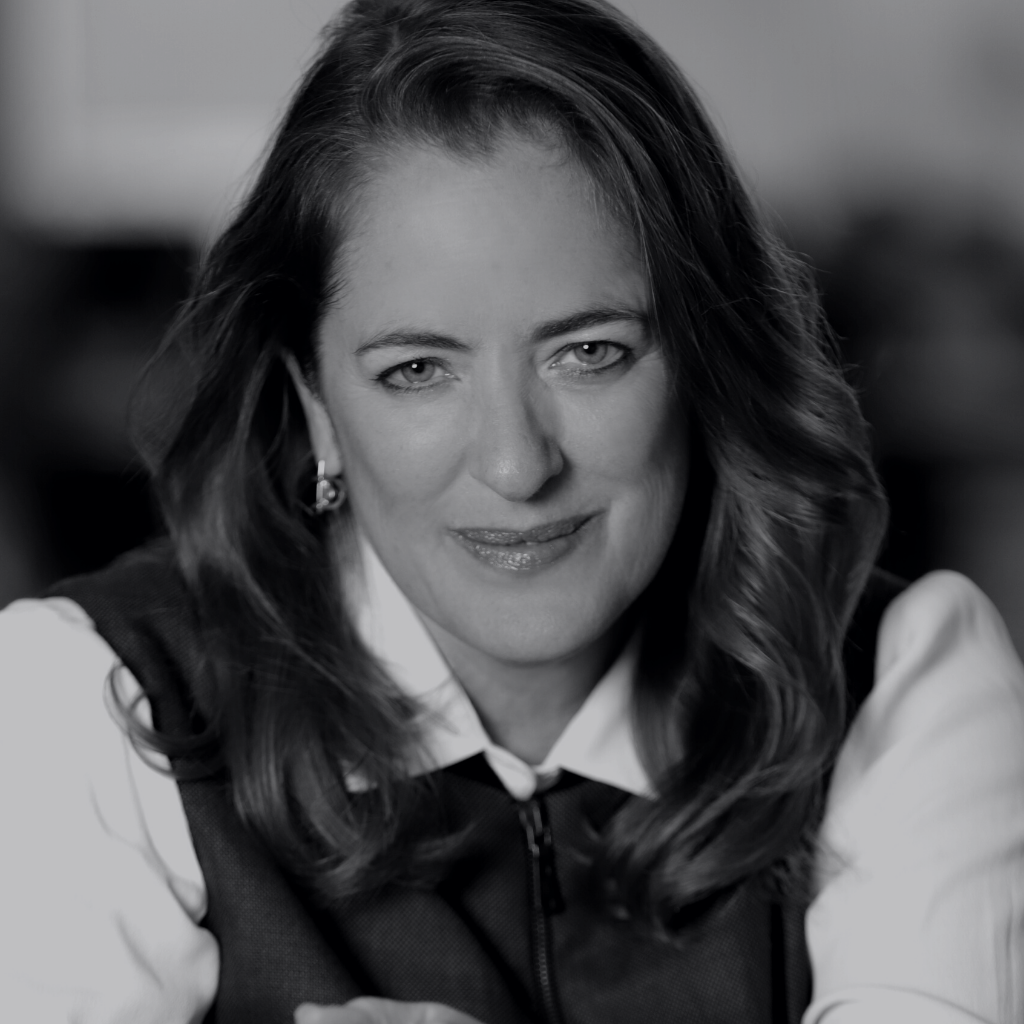


Rosemarie Ryan is the co-founder of co:collective. co: describes themselves as a creative and strategic transformation partner for purpose-led businesses.
They are some of the best strategic problem solvers and business builders I know.

What Is Your Leadership For?
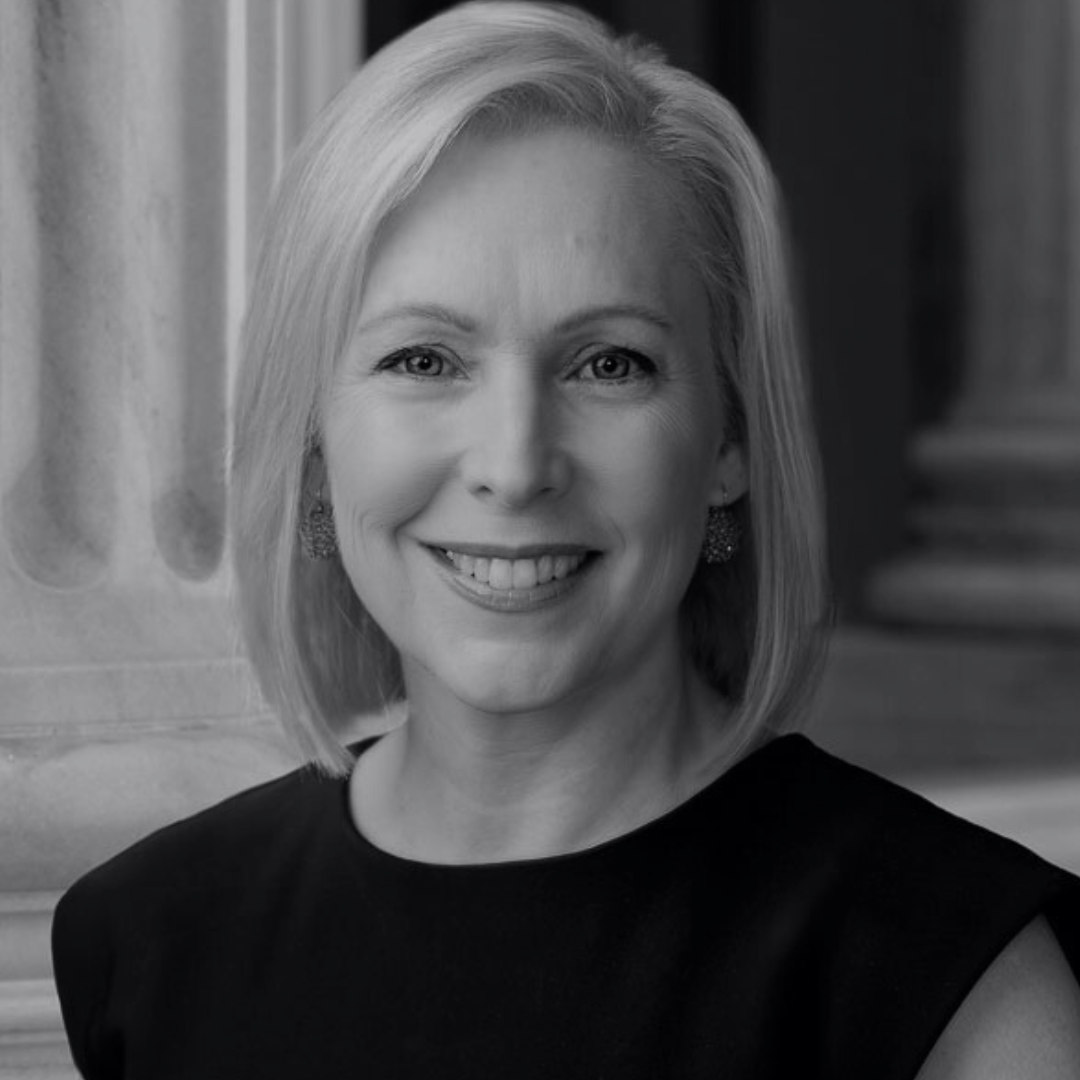
Senator Kirsten Gillibrand is the Junior Senator from the State of New York.
Running for public office places you in a spotlight that is white hot. Being clear why you’ve made the choice to run in the first place is table stakes for creating the life you want to live and the legacy you want to leave behind.
What Do You Think And Why?
Tom O’Keefe and Jeff King are two of the four partners who have just merged their respective businesses, OKRP and Barkley.
When we are clear about why we think what we think, when we are free of insecurity or hubris or ego, then we can assess an alternative path with an open mind.
Mergers provoke the need to lead through this lens.
How Vulnerable Is Too Vulnerable?
Anselmo Ramos is the Co-Founder and Creative Chairman of GUT, a global independent creative agency that’s headquartered in Miami, and with six other offices around the world.
How vulnerable is too vulnerable?
The answer, of course, depends on the culture that you have created. If your culture is based on deep and enduring emotional trust, you give people the ability to show up as complex, multifaceted humans, to show up as whole beings.
Are You Conscious Of Your Choices?
Kara Swisher is the most effective and successful tech journalist of our lifetimes.
In a world of white men with giant bank accounts and even bigger egos, how did this 5 feet 2 inch, self-described, liberal lesbian mother of four, end up as the most influential and insightful reporter of the technology age?
As you’ll hear, Kara puts it down to curiosity, confidence, and understanding the choices available to her.
This week’s guest is Avery Baker. She’s the former President and Chief Brand Officer of Tommy Hilfiger.
Six months after she stepped down from her position at Tommy, we talk about her desire to empower others and why it's an essential skill to demonstrate as a leader.
We also discuss the new leadership paradigm that we have developed together for creative and innovative businesses. We call it 'Partnership Leadership'.
Rosemarie Ryan is the co-founder of co:collective. co: describes themselves as a creative and strategic transformation partner for purpose-led businesses.
They are some of the best strategic problem solvers and business builders I know.
Emma Cookson is a partner at You & Mr Jones.
Before that, Emma was the chairman of BBH New York.
She’s one of the clearest thinkers that I know.
Greg Hahn was, until recently, the Creative Vice Chairman of BBDO Worldwide, and the Chief Creative Officer of BBDO New York.
He is not the first leader to lose their job as a result of the pandemic, and he will not be the last.
Greg talked about the shock of getting fired, about how he unlocks creativity in others and about how he’s looking at the future.
David Lee is the Chief Creative Officer of Squarespace.
David talked about the importance of creating opportunities for spontaneity, about getting away from a meeting culture, and about where ideas come from.
Jonathan Mildenhall is the founder of TwentyFirstCenturyBrand and the former CMO of AirBnB.
Jonathan talked about the enormous difficulties of navigating a young business through these extraordinary times, about how brands need to come together to be relevant in the new society, and about why leaders need to take care of themselves as well as everyone else.
Susan Credle is the Global Chief Creative Officer of FCB.
Susan talks about why she sees people taking more chances, about the importance of setting some structure to each day and about why a generous mindset matters more than ever.
Brad Hiranaga of General Mills is one of the most human leaders I know.
Brad talks about casting the right personalities as well as the right skills in a virtual office, about the need to take time to connect with people on a personal level, and about how companies will need to evolve if they’re to become part of the new society that is already being formed.
Nils Leonard is the co-founder of Uncommon.
Nils describes the role of leaders in moments like this as dealers in hope.
We also talked about recognizing the energy that different people bring and tapping into that. About the benefit of giving people time to focus. About what’s going to happen to society’s complacency. And why, to quote Virginia Wolf, “you can’t find peace by avoiding life”.
Mindy Grossman is the CEO of WW - formerly Weight Watchers.
Mindy is one of the clearest, and most effective leaders I’ve ever met.
We talked about hiring for culture, about practicing offense versus defense in times of crisis and about empowering other people to lead.
With this episode, we’re launching Season 2 - which we’ve sub-titled, “Leading In the Time of Virus”.
These are shorter, focused conversations in which we discover how some of the world’s most innovative and creative leaders are adapting their leadership to our new reality.
Karim Bartoletti is a partner in Indiana Production - a multimedia production company. He is living in Milan at the epicenter of the region hardest hit by the virus so far.
I recorded this episode just over 2 week ago. Before the world changed. It’s a conversation with Madeleine Grynsztejn - the Pritzker Director of the Museum of Contemporary Art in Chicago.
Over the last few days, I’ve thought a lot about whether to publish this episode because so much of what we talked about seems at first glance to be from a different reality.
But I think, it’s an important interview for a couple of critical reasons.
Madeleine talks about the role of art and the role of museums in both reflecting and shaping society. About the importance of constantly looking for the things that we don’t know, for breaking our own assumptions of what happens next.
Suddenly, that feels like the most important question for us to start raising as leaders.
Cecile Richards is the co-founder of Supermajority, which describes itself as a new home for women's activism that is fighting for gender equality. Before that, she spent 12 years as the President of Planned Parenthood, a that provides to 2.5 million women annually.
Public service and activism are part of Cecile’s DNA.
Her mother — Ann Richards — shattered conventional wisdom when, as a woman and a Democrat, she was elected Governor of Texas in 1990.
In the seventh grade, Cecile was taken to the principal’s office for wearing an armband in protest of the Vietnam War.
In the eighth grade, she brought food to the strikers on a picket line in her hometown of Austin.
Her first job after college, was as a union organizer in New Orleans, helping hotel workers trying to get by on minimum wage.
Cecile has been called “the most badass feminist EVER” and “The heroine of the resistance”.
Anne Devereux-Mills is the founder of Parlay House, which describes itself as a modern salon for women. Their mission is to provide a safe and supportive environment in which women can have authentic conversations and build meaningful relationships.
Anne has been the CEO of multiple companies. She’s also a wife, a mother and a four-time cancer survivor.
This episode is called, The ‘How Do I Spend My Time’ Leader.
Carter Murray is the global CEO of FCB. He is 6’7” and shows up larger than that. In his own words, he lives on the front foot, charging forward.
But the truth is more complex.
When he took the job 7 years ago, the agency was named DraftFCB and was seen by most observers as a turnaround. Others wondered if the world needed FCB anymore.
But some people had a different view. The people that still worked there.
This episode is called “The Listening Leader”.
Sarah Moffat is the Global Chief Creative Officer of Turner Duckworth - a design company that was formed in London in 1992 by David Turner and Bruce Duckworth.
Bruce and David are still around, but they don’t run the business any more. In late 2018 they handed over the reins to two long-term employees - Joanne Chan who became CEO and to Sarah.
New title, new responsibilities, new expectations. How do you make that transition successfully?
This episode is called “The ‘Do You, Boo’ Leader”.
Brad Hiranaga is a disruptor and a change agent. Working inside one of the world’s most storied and established companies, he is bringing about systemic change to the way General Mills shows up in the world.
Unlocking creative and innovative thinking at scale requires not just an ability to take risks but a willingness to search for them.
Marc Maltz describes himself as an organizational clinician, and he’s brilliant at getting the CEOs of tech companies and their senior teams to work together more effectively.
Marc has become a good friend and I have huge respect for his work and how he does it and I thought it would be invaluable to hear his thinking on some of the issues I see every day in my own work.
Whether you’re writing code or ads, whether you’re building platforms or teams, the need to unlock creative and innovative thinking sits at the heart of the world’s most valuable businesses.
And what makes that heart beat is trust.
This podcast has listeners in 84 countries. Most of those are pretty open, democratic societies where freedom of thought and movement are both expectations and rights.
Born and raised in Russia, Leonid Sudakov had neither in his formative years. His father was not allowed a passport until he was 50. Leonid didn’t meet a foreigner until he was 16, when he moved to Moscow carrying with him a bag of potatoes and his wits.
From these beginnings he has become an exceptionally creative and thoughtful leader, unlocking innovative and creative thinking at every stop, including 3 years as the global CMO for Mars Petcare, a $20 billion global business.
We are all heavily influenced by our upbringing. Whether we use those experiences as catalysts or obstacles depends on how we see them.
I’ve learned a lot in the three years since I started this podcast.
Carl Johnson was my second interview. I was re-reading the transcript the other day and was struck by the fact that so much of what Carl said was timeless. The insights and understanding he offered haven’t decayed. In fact, I find that they are more valuable than ever. So I’m going to replay that interview. Whether you’ve listened to it before or not, I’d encourage you to hear what he has to say.
This episode is called, “The Unreasonable Man”.
Dame Carolyn Fairbairn is the Director-General of the Confederation of British Industry. The CBI represents 190,000 British businesses, and campaigns the government for policies that support the needs of companies up and down the land.
When Dame Carolyn took the job in the summer of 2015, a vote on whether Britain should leave Europe was a David Cameron election promise. A year later, Brexit had become the greatest driver of uncertainty and hostility in the British economy. Almost four years after that, it still is.
It’s much easier to lead when things are going well, the future is clear and results are trending up.
It’s a different story when you’re faced with endless uncertainty and personal attacks. In those conditions, staying the course and showing up every day requires something more than short-term goals. Something more than quarterly earnings reports or the next industry award.
You’ve got to be clear of the difference you want to make.