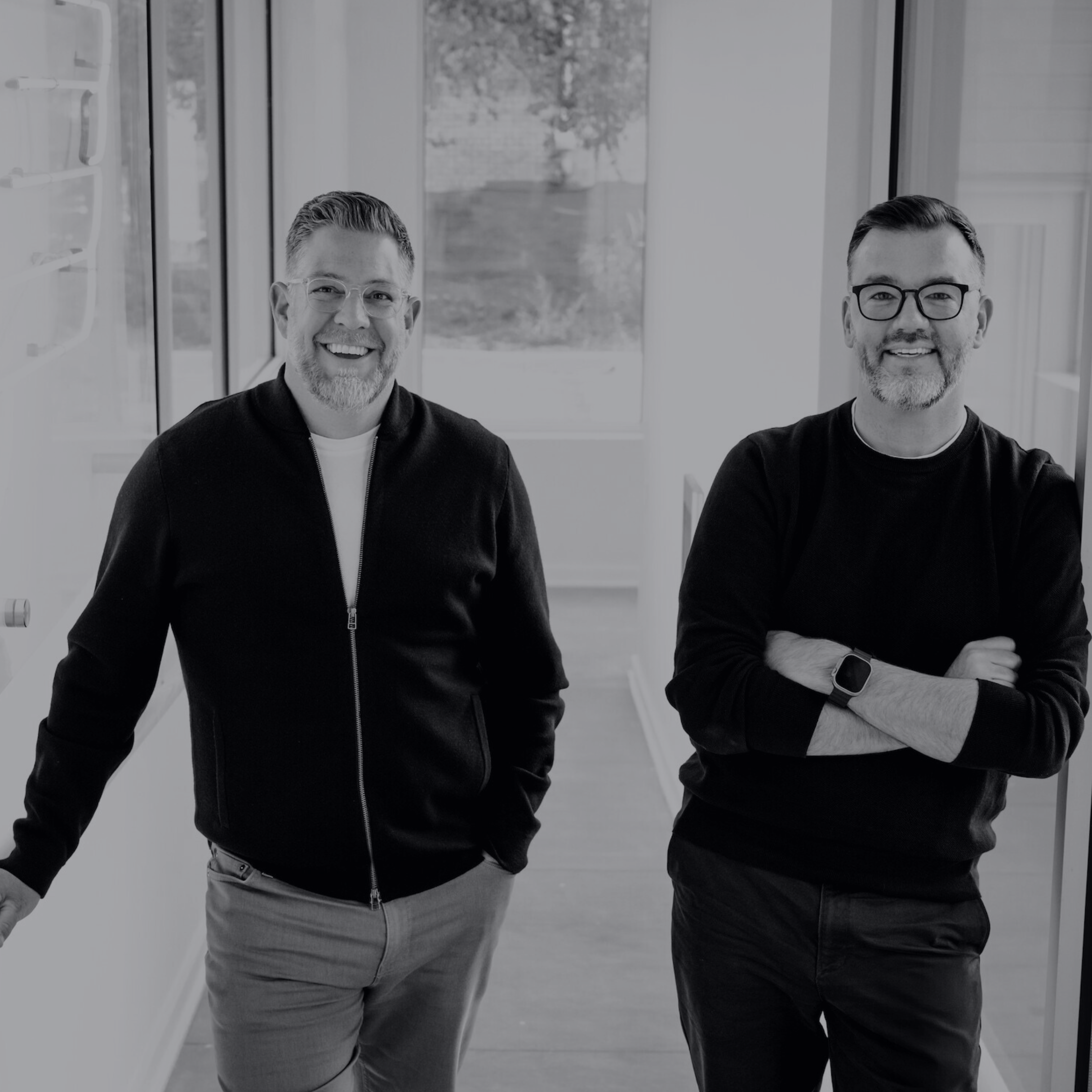
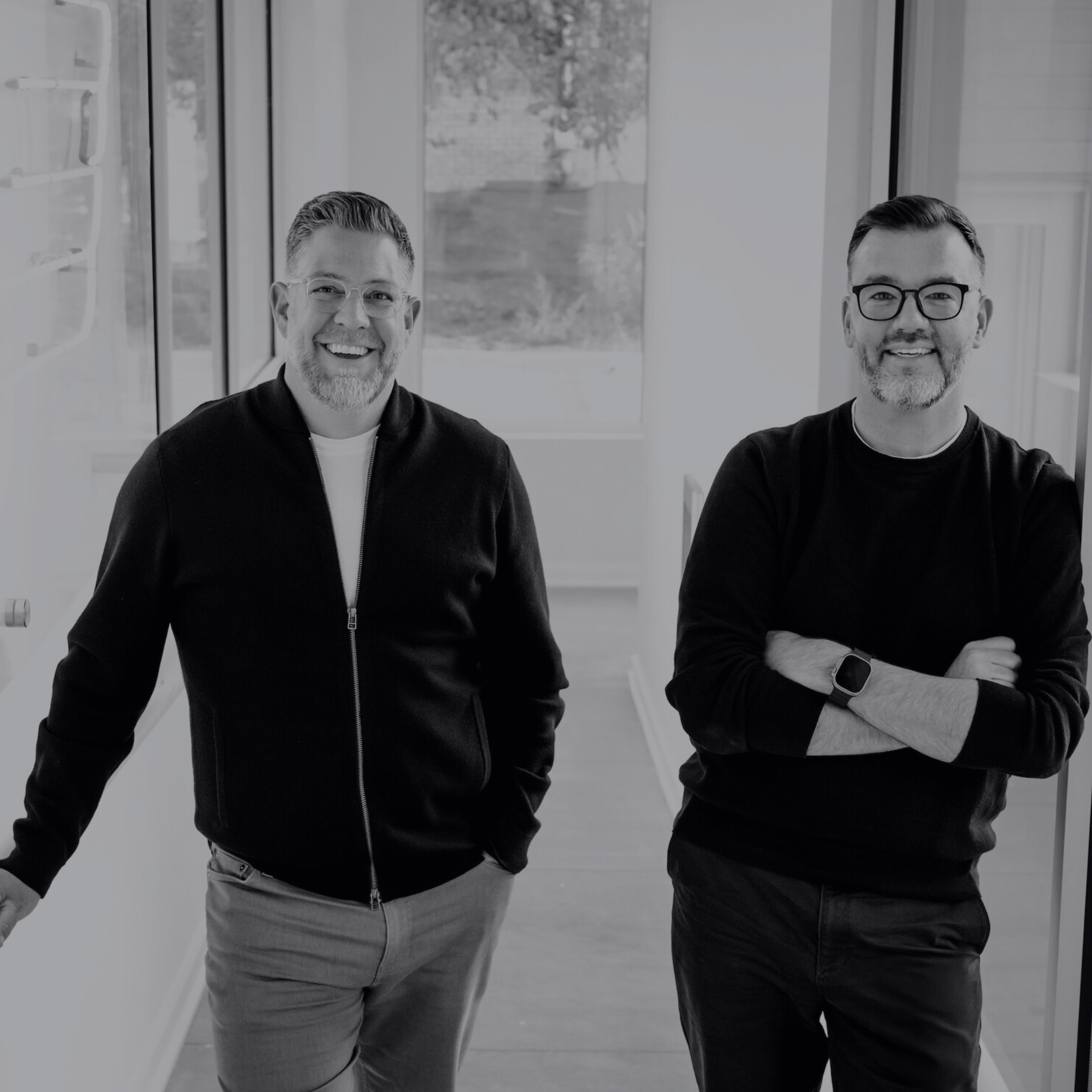
Rocky Novak & Brad Surcey of Zeus Jones
How does courage manifest for you?
"FEARLESS CREATIVE LEADERSHIP" PODCAST - TRANSCRIPT
Episode 289: Rocky Novak & Brad Surcey
What does courage actually look like in leadership?
In this episode of Fearless Creative Leadership, Charles Day speaks with Rocky Novak and Brad Surcey, co-CEOs of Zeus Jones, about partnership, independence, and leading through uncertainty — both inside business and outside it.
They discuss why independent companies can invest ahead of clients, how curiosity and optimism shape hiring, and why great creative cultures run on principles rather than rules. But this conversation goes far beyond business. As events unfold around them in Minneapolis, Rocky and Brad share how leadership changes when your responsibility shifts from performance to protection — caring for people first, then the company, then the community.
This is a candid discussion about partnership, resilience, and humanity. It reveals how courage shows up in everyday decisions: investing before certainty, standing by your values, and supporting others when there’s no playbook.
—————
Charles Day (05:22):
Rocky, Brad, welcome to Fearless. Thank you so much for coming on the show.
Rocky Novak (05:26):
Thank you.
Brad Surcey (05:27):
Yeah, thanks for having us.
Charles Day (05:29):
Let me start with you, Rocky. When did creativity first show up in your life? When were you first conscious of creativity being a thing in the world?
Rocky Novak (05:36):
That's such a good question. So early, early days when I was, you probably can't tell based on looking at me or even by the name Rocky, but I, I was a kind of classically trained dancer from when I was six years old.
And it happened because my mom was taking my younger sister to sign her up for Baby Ballerina class. And I have a twin brother. And she said to the two of us, she said, you know, there's a baseball card store there too in the same mall. So I'm going to drag you along and you can go to that. And while we were there.
She was signing my sister up and on the there was a big old kind of console television on the ground and they were running of VCR tape of the show Star Search. They used to be on Saturday nights in an NBC Ed McMahon Star Search, and on the tape, they were running were four kind of high school age like male dancers and they were playing their performance over and over again and I was we were just taken. It was so athletic, so cool.
People in the crowd were screaming like they were the Beatles or something. And my brother and I were both kind of watching it. And of course, the owner of the studio swooped in and she said, hey, you know, we have a boys class. If you want to just try it, it's really fun. You can start. And she kind of hooked us in and it was fun. And then the first time at the end of that year where we performed, where the kind of curtain opened up and you heard people responding to you in that way, I never even realized that was a thing you could do. And that feeling, once you get it, you're hooked. And so I kind of dove in and it became a pretty serious pursuit all the way through high school. And it was great because for me in kind of a more traditional sports dominated, do good at school kind of, you know, kind of straight down the middle, grew up in Minnesota, to have that other outlet and to see that you could be both things that you could have, you know, you could follow academics rigorously and work hard at that.
You could be an athlete in the traditional sense, but there was also an artistic outlet for creativity and a feeling of performing and what that could kind of fill up. And then the people you meet and the characters, it's just a different world. And so being able to navigate that, the kind of like the idea of, I love that, think everybody's got it in them, know? Some level of creativity or artistry or another side to them that as soon as you get a chance to kind of see it, to kind of tap into it, it's just a totally different thing.
Charles Day (08:14):
Do you still dance?
Rocky Novak (08:15):
Only at weddings after a couple glasses of wine. Yeah.
Charles Day (08:20):
Do you miss it?
Rocky Novak (08:22):
You know, I do. I do. And I stay really, really close with a lot of the people. A lot of them went on to do it professionally and still do. They're choreographers or they're performers. And so I get to kind of like look back into their world and see them and be a little bit jealous that they still that they still get to do that. You take lessons from all of it as you move forward. Right. So the ability to, you know, a big pitch room or on stage with you feel like you're on stage with a client sometimes. And I actually love that.
But my favorite people that I've hired over the years have like theater backgrounds or dance backgrounds or where there's that… the idea of kind of communicating an idea or a thought, but almost doing it with a bit of theater. Not in the old school kind of new business way, but like actually allowing people to kind of story tell your way through an idea that can feel like performance. allows, I think it allows clients and other people to kind of, it taps way more heart than head and I think the best ideas have to. So you kind of, know, we're on stage a little bit every once in a while, I guess.
Charles Day (09:23):
Yeah, that's for sure.
Brad, what about you?
Brad Surcey (09:27):
I think the first time I can remember it kind of coming into my life was, I mean, from like, maybe like kindergarten, you know, I would like, you know, like win the art contest or whatever we would have every year. But I think for me, it was somewhere around, so I should also mention like, I grew up in a small rural town in a part of the country called Appalachia, and I was always just drawn to things that just seemed so foreign to where I was at, right? So early on for me, there were things like MTV was just like a huge influence back when MTV was playing music videos and this is like the eighties.
And I can also remember like when the Jordan ones came out, you know, like the first Air Jordans, like just thinking like, so like my mom still has all these books of me drawing like different designs of tennis shoes and basketball shoes and things like that. So it was always like this mix of like sports and pop culture kind of in my life.
Then as time went on, you know, of course, like all the every sports team I was on, I would design our uniforms and like paint, you know, paint the mural on the wall or whatever in the locker room. And then then I would also like I taught myself how to screen print so I could make T-shirts for my friends, rock bands and things like I didn't know that there was a career that you could do called graphic design until I was like halfway through college and I just kind of found it by accident. But it was always kind of what I had naturally done. And so like I ended up just kind of turning it into how I wanted to spend, you know, my career after college.
Charles Day (11:01):
It is still tragic, isn't it, how few people relatively understand that you can make a career out of these kinds of skills and these kinds of areas of interest. I mean, there are so many people, think, for whom they just don't, they're not in an environment that ever teaches them that or believes that for them. And it feels to me like that's one of the things that the industry has still been really, really bad about is opening up new pathways to hiring diverse talent, diversity, the definition of diversity being as wide as you want it to be.
Brad Surcey (11:09):
Yeah.
Rocky Novak (11:23):
Yeah.
Brad Surcey (11:28):
Mm-hmm.
Rocky Novak (11:30):
Yeah, there's a great actually there's an organization in town here—
Brad Surcey (11:31):
Yeah.
Rocky Novak (11:34):
And now they're in Kansas City and Milwaukee, I believe, called The Brand Lab. And that's kind of the founding principle. You can't ask for a job if you don't know it exists. And so they start in a lot of these city schools at like the middle school and high school level. And so a lot of the agencies in town have gone through and spent time and then they have internship programs and then they do job placement. And now, because it's been going for, I bet it's 15 years old, they've got graduates now coming back. And so they've got, like, classes of kids that they've proven are, you know, like out there graduates in the world. And so it's great. And now they, you know, they've extended, like I said, to multiple other markets, but it's, it is, it's, there's a lot of, we're not doing it ourselves. We're having to lean on other organizations to bring that interesting new perspective and that talent into the industry.
Charles Day (12:25):
Yeah, it's vitally important and we all collectively need to do a lot more about it. I just dropped an episode which is an interview with Aaron Starkman of Rethink who, as you know, are fiercely independent. And you guys at Juice Jones are fiercely independent. So I think I'd like to start the conversation by asking you, from your experience across the years of your careers—
Rocky Novak (12:37):
Mm-hmm.
Charles Day (12:51):
What’s the value of independence today? How do you articulate and define why this is such an important reference point for you to present yourself to the world as?
Rocky Novak (13:01):
You know, the independent model for me, again, having had been at Fallon at a time where it was, where it really behaved independently, having had been at Fallon, you know, as an entity inside Publicis, a big kind of mass holding company, and one that I think the market has proven has gotten a lot more right than they've gotten wrong,
So I can just, I can only by, by sake of comparison, independence for us, there's just a level of, first of all, speed.
And that comes with size. We're not having to check in a lot. We're able to make decisions really quickly. We're able to say yes to things and no to things based on what we think is right for the long term trajectory of the business as opposed to, you know, there's just a nature of being publicly held where you're having to chase the quarters. I know I have friends who are executives at different holding companies that measure their careers in quarter by quarter, not by year because you are so beholden to that.
So that's a lot of it for us is I just think we like to have control over the kind of work we do, who we partner with, how quickly we can move, when and how we hire or make, you know, kind of build partnerships. There's just a freedom that I think gets right to the work. And so we I think our clients can feel it in the work. And so we have these really great kind of senior level, oftentimes at kind of the CEO level relationships where they come to us and say, we're coming for this group of brains. We have a problem for you to solve. And it's as simple as that. So a lot of it just taking out the layers and the simplicity and the reporting and knowing that we can chase what we want to chase is kind of what I felt, my first, you know, however many months there.
Charles Day (14:54):
How big an adjustment has that been for you? Because to your point, coming out of a holding company owned company, where you are required to look at the quarterly results, to suddenly being in a place where financial performance is clearly important, but you're able to emphasize other things that you believe lead to financial performance. How big an adjustment for you emotionally as well as practically has it been to say, okay, I can... I can breathe more easily as we get to April the 1st and July the 1st and so on. How do you now define success?
Rocky Novak (15:25):
Easiest kind of answer the the largest difference for me has just been a little bit more of time spent.
So I'm really getting to be in rooms, in work, in decks, with clients a lot more as opposed to building teams and setting people up. So that's just personally been really, really nice for me because I love that, the kind of open whiteboard and the kind of like intellectual pursuit of a really cool, interesting thought or creative idea.
And then just from a running a business standpoint, it does. It just allows you to look out a little bit further and kind of have a longer kind of lens about how you run the business. The waves and the momentum of the business and knowing when kind of things are going to come in and when you get really busy and when you're not, you kind of get to manage by feel a little bit. ⁓ And that's what long term, at least for Brad and I, the conversations we've had about long term successes, this is a really interesting place that does really great work and it's about almost 20 years old. And I think what Brad and I are committed to is long-term successes. We think the industry is better with a thing called Zeus Jones in it. And it's our job to figure out what that looks like, because it's a place that's naturally restless. It's never been the same thing over and over again. So we have to define what with technology and AI and how clients are evolving, what that thing is going to be for the next, I would say 20 years, but I don't know, Brad and I got 20 in us. So I'll say the next 10 years.
But that's what long-term success… We think it's really is it's a wonderful place and I think it does great work and I think the people that spend time there whether they're there now or they look back it's time that they really really value where they got to sharpen their tools and do great work and we want to make it a cool, interesting, viable, and probably slightly different thing, you know, five years from now than it was five years ago. So that's how we think about we talk about it a lot.
Charles Day (17:23):
And Brad, is there anything about independence, because you've lived through this for, what, 19 years, I think, plus. Is there anything about independence that is a struggle for you? Does it create obstacles that holding company-owned companies don't have to deal with?
Brad Surcey (17:27):
Yeah.
Okay, so one of the things that I talk about all the time is because I've been here for 19 years, I don't always have a lot of things to compare us to other than who we sometimes it feels like we as Zeus Jones will reinvent the wheel quite a bit. Whereas there's probably some things that exist in the industry for a reason, right?
But we are always just the type of people who will question every one of those things that do exist for a reason and decide if we're going to do it, yes or no, kind of along the way. And so I think that it probably creates a lot of times where something maybe could be done a little bit more simply, but we've taken the time to question every step along the way to make sure that it's right for us.
Whether it's like, hiring or the way that we structure ourselves or the way we build client relationships or how we, you know, build a rate card, you know what I mean? So like all of those things that I think are givens in a lot of agencies aren't for us. And we've questioned every one of them along the way, which is it's a lot of time and effort, you know, but, but we also feel like the positives of independence has far outweighed the negatives. And I think in a lot of ways it goes back to something Rocky said, which is, I think that like when, when you're not independent, sometimes you are kind of forced into a box as an agency and people will think of you one way and you play inside an ecosystem in that way. And we get to be much more agnostic about the kind of answers that we go out in the world for. And so, you you can think of it like, ⁓ you know, if you're a digital agency and a client comes in with a problem, you're probably going to have sort of a digital answer for them, right? But I think for us, we're just searching for whatever the answer is. We're just kind of a collection of, you know, senior smart human beings, you know, using whatever means we have to get to the right answer by any means necessary. And I think that being independent allows us to sort of like do that and hold our own feet to the fire and kind of like go, go fully into that in a way that maybe we wouldn't if we weren't independent.
Charles Day (19:44):
I know that constant evolution is a big reference point for you guys and for the agency. How intentional is that? How much of that is driven by sitting down regularly and saying, what do we have to do to be different? And how much of that is an organic response to the nature of the industry and the nature of the kind of people that you hire?
Brad Surcey (19:48):
Yeah.
I think it's a little bit of both. if you're kind of like the side of the agency that we are, you should be able to move pretty quickly, right? And change pretty quickly. And so I think that like, we do have this ability, I think, to pretty, you know, to look at a situation or look at the world that we live in or where the industry is headed and move the way that we need to move.
Rocky Novak (20:06):
Mm-hmm.
Brad Surcey (20:27):
There's some of that that's organic where we are sort of like reacting to the world around us, it's one of our superpowers is the ability to sort of like read the room and pivot pretty quickly into the things that we think are relevant, the things that we think are interesting, the things that we think are going to move brands and culture forward in really important ways.
But once we sort of do that, we also do sit down and plan. We are an agency founded by strategists, right? So like we do at a certain point sit down and sort of make a plan. But some of it is just sort of like, it's a little bit intuitive and it's a little bit sort of cerebral, I would say at the same time.
Rocky Novak (20:50):
Yeah.
We, think institutionally, we put ourselves out over our skis with intent. AI is a really good example. it's clearly, so Zeus Jones was initially founded at the era of social media when there was, know, as social started to kind of uptick really quickly, there was a recognition that...
Brad Surcey (21:10):
Yeah.
Rocky Novak (21:28):
You could either slap a share button on the ad that you were running anyway, or you as a brand could become truly participatory, which was scary as hell for most clients. Letting control of their brand, right? No one, none of us learned to do that. And so...
We're now at a moment that is similarly, if not more seismic with AI. And we just as a company knew that this is not something that we can let happen to us. We have to happen to it and you have to have a point of view. So even before I started, there was a lot of ⁓ on the site and publishing by Zeus Jones to say, here's what we think this means for brands. And it was theory. It was philosophy.
It was written intentionally to say, we're going to put this out and put ourselves out there. And if we can't meet the moment by showing clients how to put it in practice, then that's on us. And so then it becomes, to Brad's point, an operational question. It's what are we building for clients and this belief system around, know, it's not just about efficiency and tonnage, although some of it can be, but it's about your brand has the chance to become a living breathing thing and to become part of your brand team and inform you in a way that it didn't before. And what does that look like? How do you build that for clients? What does that process look like? What is the staff needed? And then the one thing we realized that we needed to do was invest in our own stuff. So we literally have time blocks on the calendar weekly, whereas many members of the entire company come together and literally just workshop and say and ask questions. What if we built something like this? I wrote a different model or I tried this in Claude versus OpenAI and here's how the two models look differently. And it's all on spec. It's completely investment work. And similarly, we have people that we're bringing in and investing in ahead of client revenue, which again is something that independence allows you to do, but we know that we are only as valuable to our clients as we are ahead of them on some of these things. And in AI, being ahead of the curve is we might be two weeks in front of where our client is, but that's a really valuable two weeks for them. If we can make a bunch of mistakes on our own dime and then bring them into the conversation later on and say, no, no, we've already learned these three things. We ran into those three walls together, because we're spending time and investment money against really cracking what we think is next. It's kind of like call a shot, chase it down, build it for clients, and if it works, it works great. Rinse and repeat, and it's just, there's a restlessness that we've kind of tried to operationalize as much as you can.
Charles Day (24:15):
That investment mindset, which is powerful and palpable for all the reasons you've just described and others, that is a difficult thing to imbue within a large agency.
How do you create and how do you perpetuate, in your case, the environment, the culture that supports that kind of investment environment that allows you, encourages you, makes it okay to take risk? I mean, one of the things that I say to clients all the time is, know, they talk about, you're have to be risk-taking. I'm like, fine, you know, where is that in the balance sheet? Right? Because if it's not in the balance sheet, it's just a thing you're talking about, it isn't a real thing. So what's the culture that allows you to live through
Rocky Novak (24:47):
Yeah.
Charles Day (24:56):
That lens of we're going to take this risk we want to be two weeks ahead of our clients not a month behind them.
Rocky Novak (25:02):
I mean, it's obviously contingent upon running a healthy business.
So you have to have you have to have a growth business. You have to have a healthy pipeline. You have to have strong top line growth. And then we again this is something that I was happy to inherit have never really been an hourly billable rate company. We've never been a timesheet company. We have been a come to us with a great big problem and there is inherent value in that kind of a company. And so that allows you to operate at a slightly different margin level.
Which again, I was happy to inherit. But then that margin is only as valuable as your willingness to put it back into the company, right? And it is, you said it, it's a line item. If it's not, it gets dropped. So we said Brad and I sit with our CFO, and if she doesn't freak out, then we don't freak out.
But we just say we talk through it and she's brilliant. She's got a really great, she comes at it with financial acumen but she's got an operator's mindset and she said, no, no, this is important. You're right, I see it. I buy into it, we all do. So we're going to have, you know, additional employee headcount time spent. We're asking I mean if you're taking time out of really busy highly utilized employees to say no it's playground time for three hours on Thursday morning because we need to advance this and keep getting better and sharper. That's money that you're leaving something on the table. So but we, you, to codify you have to say here's what it's going to cost. Here's why it's important. And then it requires focus. You can't do that across everything you want to chase. You got to say this is the one that, that we believe in as a group, as a leadership, there's momentum with clients. We think any investment we make is gonna come back two-fold, three-fold, ten-fold. And so yeah, you run a healthy business and then make the call. And then you kind of got to commit, know? Make sure that those investments are, you really got your shoulder into them.
Brad Surcey (27:04):
I was just going to say as well, when we are doing it for a client, I think the nature of how we set up a client relationship also helps with this too, because rarely with us are we getting briefed by a client and we're going off in a black box doing our work and then presenting in sort of a, in a pass fail kind of environment. What we're really doing is solving these big nebulous problems with, along with a client. So they're along for the ride. And sometimes they're on the team working as hard as we are.
Rocky Novak (27:34):
Yeah.
Brad Surcey (27:34):
So it really feels like we're in partnership on it. And a lot of times when you're in partnership with a client and you really let them in and you bring them in in that way, you get more leeway and you can go further and they trust a lot more because they understand what's happening and they understand what you're exploring and the walls you're running into and how you're sort of like, you know, getting around those things. So I think that the nature of how we set up those relationships goes a long way in giving us the freedom to sort of like explore interesting ideas that are maybe brand new.
Charles Day (28:06):
I’m struck by Rocky's definition or description of a CFO who has that kind of mindset. I mean, it's indicative, it feels to me, of a culture that knows how to cast the right kinds of people to perpetuate and develop a kind of culture and environment that you've developed. What are the qualities and characteristics that you and the company have looked for over the last 19 years to reach this point where you have that kind of mindset?
Brad Surcey (28:17):
Mm-hmm.
Yeah.
I would say there's a couple of things. one, does someone have the skillset to, you know, to meet the bar, right? But then beyond that, I think we're really looking for people who are curious about the world and maybe not just one thing, but they can find ways to be curious about just about anything and they can dig into it and get genuinely interested in it. I think we look for people who have an optimistic mindset.
Brad Surcey (28:55):
So people who can look at something that from the outside might seem like the most boring B2B thing you could work on, but then finding a way to say, oh no, actually, this is the coolest thing we're doing right now, and here's why. And you get genuinely invested in it, and you're excited about it, and you learn about it. So people who can do that over and over again, because I think one of the things we try to do is find really cool ways to move culture forward with really unexpected partners along the way, right? And I think that we've always been really proud that we get to do that. And then I think you have to have a little bit of comfort in ambiguity because rarely, rarely do we write a brief and the project just goes line by line down that brief until the—
Rocky Novak (29:35):
Mm-hmm.
Brad Surcey (29:45):
—the day it happens, right? Because inevitably something happens in culture that fundamentally changes the problem we're trying to solve in the first place. Or there's a reorg on the client side, or there's, and you have to be able to sort of like roll with those things and maybe have done it enough times to understand that like we're a group of capable people, it's going to work out.
And nobody freak out about this, it's going to be okay. And in fact, maybe sometimes if you're willing to not be so rigid about how you plan for things to go and you're able to be open to new opportunities that come your way, you end up somewhere way more interesting and way better than you could have ever planned for in the first place. If you're willing to listen along the journey to sort of hear where you need to sort of like, you know, zig or zag a little bit.
Charles Day (30:36):
Rocky, when you got this opportunity and you decided to take it, I'm curious, obviously you had a long-term relationship with some of the principal players at the company and you weren't walking in blind, but what was your mindset when you decided, okay, this is the challenge I want to take on, this is the thing that I'm now responsible for? How did you approach that? What did you decide was important?
Rocky Novak (30:58):
Well, so I was walking into a place that I thought was going to be full of quite senior, whip-smart leaders in their own right. And it was absolutely true.
I told everybody right away I was going to talk to all of them before I ever talked at them.
Like there was so much right happening with the place that I wanted to just soak it up. And I've been in rooms where I'm just running to keep up since I started and I love it. And it's like sharpening skills and I'm growing again in a way that I was hopeful I would. And so I knew I wanted to get uncomfortable and I wanted to get pushed and I didn't want to know. You know when you're at a place for a really long time you're in those meetings and you kind of like I feel like I know how this meeting is going to end. And it's great. And there's power in that. But also, you can it can feel like stagnation. So I knew I wanted to be uncomfortable but I came in with the mindset of, they must see something in me and I got a lean on I think I've learned a few things.
So I got to bring some, you know, be additive on the business side, on the operations side, I think. And then I got to kind of learn and try and figure out what was so special about this thing, because it is kind of a nebulous place. So there has been a lot of me being in rooms, watching people work, assigning myself to projects to see how a different combination of creative and strategist, we're going to crack a problem than the one that I was in in the morning on a different brand. And then trying to figure out how to articulate it, how to tell a client about it, how to maybe, maybe, not that we want to jump into the world of pitch craziness, but maybe tell a pitch consultant about it that I've known forever to tell them about this little interesting thing in Minneapolis that's actually working on some of the biggest brands in the world and why.
The place just has a feeling to it where the people there feel like they have each other's back. They're pushing each other hard. But like there is a…
And that was a similarity like the Fallon always had. There was a feeling to the place where even when you left, it stuck with you. And Zeus has the same kind of vibe.
Charles Day (33:14):
What are you worried about screwing up?
Rocky Novak (33:17):
My God, everything, constantly.
Brad Surcey (33:19):
Actually, I should just pull up our text thread and can just read.
Rocky Novak (33:24):
Yeah, right? And any given day.
I think that there's benefit to a little bit of structure, there's benefit to a little bit of process, but there's also, there's a lot of magic that happens outside of that. it's the old right, creativity loves constraints. This is a place where I think in the right moments can be really additive, but in the wrong moments, where if I'm looking to more efficiently get to an answer or to close something or to move a wonderful team onto this wonderful new challenge, that...
It can get to the work and suffer. Because everyone is so senior and because they've kind of earned the right. There is a level of autonomy granted inside this company that I have. I don't think I've seen anywhere else. It feels way more like a like like a high end consultancy where you have partners running practice areas or or a law firm where my brother is an attorney where you've got partners who kind of run their practice area. They come together when needed but
They're assumed that you're gonna go in and have a level of professionalism and thinking and that you're gonna continue to drive the business forward. a creative company to have that, which we do, is actually something really special. And it's just a testament to the people. The people in the building are incredible and they drive it forward. that's, Brad and I's job is more often to get out of the way than it is anything else than to point the direction.
Charles Day (34:48):
I think this is such a fascinating topic because it strikes me more and more frequently that when I'm working with highly creative companies, there is structure and process, but it is not particularly obvious. But I think what actually steps in is that we use different words for this collectively and individually. The culture, the DNA, the values of the company, those things are actually so well understood within the business, that they play the role of creating structure. They provide, ostensibly, freedom because people play within those constraints. They understand this is Zeus-Jones-esque, right? This is Rethink-esque. This is Wieden and Kennedy-esque. We do these things here, but we don't do them this way, and we don't do those kinds of things. Brad, does that resonate for you? And if so, how do you articulate what those things are?
Rocky Novak (35:15):
Yeah.
Brad Surcey (35:40):
I think it's culturally relevant. think it's smart. think it is executed with a level of, I would say like, know, executed at a level where it feels almost effortless in a certain way. So maybe like something just feels cool when you encounter it, but when you unpack it, there's really sort of like a lot of thought, a lot of smart thinking behind it. We don't always want you to feel the smart thinking immediately because it's, you know, kind of gets in the way of the...
I have this thing that I tell people sometimes where because we started out as such a heavy strategy shop and because designers and creatives are involved in all of the upfront strategy work, like, sometimes I just tell people, do all of that work, absorb all of it. At a certain point, sit down, forget all of those things and just make the right thing. And then we'll go back and revisit it logically after the fact.
And almost inevitably people make something that is 90% there, you know, the first time. I think that's a long way of saying that like maybe one way to sort of get to something that feels like it has that Zeus Jones DNA that's like hard to explain is that it feels intuitive, but it also makes complete sense if you really unpack everything. I would also say that's a moving target.
As culture changes, as society changes, again, like the thing that feels that way a year ago won't feel that way a year from now. And I think that, and that's what we're always kind of chasing in a way. And so I think that like, yeah, there are certain hallmarks, I think of our best work, which is like, like I was saying before, like it's like, it's really smart. It's really culturally, you know, tuned in to culture in good ways. But I think we're also chasing something that is moving. It's a big moving target.
Rocky Novak (37:35):
Charles, what you said, I'm going to give Brad credit for something he said on Friday that I was struck by so… That that sense of a place that kind of governs itself just based on how it feels. Brad used the term last week, he said this place and the way… and that part of it is is how he and I have found a really quick… We very quickly synced up in how we run kind of how we lead.
And he, the turn of phrase was leading based on principles, not rules. And I think that is spot on for Zeus Jones. I think people want the work to be smart. They want it to be culturally relevant. They want to leave, they want the work to leave the world a better place than it found it. ⁓ We hold each other to a high bar. And beyond that, and it's got to solve a problem, right? But beyond that, there's not much that's you know, written in ink. We can kind of figure it out as we go.
Charles Day (38:36):
Yeah, pretty principled. Brad, what were your concerns, if any, at the announcement that there was a new CEO coming in?
Brad Surcey (38:45):
Well, OK, so the other side of Rocky's story was sort of like how we're telling it from the Zeus Jones side of things, right? And so I think it was probably around a little less than a year ago. I sat down with Rob and Adrian and they're like, OK, like, what do you think about maybe like running this place? I was like, OK, could definitely sort of get my head around but the conversation I had with them was like, here are the things that I think I would be good at. You know, and it's things like people, the work, client relationships, you know. But there's this whole, you know, if we're going to be really successful, there's this whole other realm of stuff that needs to also be looked after, right? And I have not spent my last 18 years looking after those things. I've always looked to, you know, Rob or some other people who are specialized in these areas to really take care of that.
Couple of weeks later, we had this conversation about like, what if we knew someone from outside of here that can maybe help with that? And I remember thinking to myself at the time, I was like, yeah, good luck with that. I mean, like I, you know, I can't imagine someone stepping into this place that you just, there are no rules. know, it's pretty, it's pretty intuitive how you sort of enter into the place. And then they're like, do you remember like Rocky Novak? And I was like, oh, yes. And instantly I thought that could probably work.
And so, and we hadn't talked in years and we sat down for coffee one day. And I think within the first five minutes, we were like, this could absolutely work. I mean, like we're finishing each other's sentences. he definitely has one skill set. And one world that he's lived in is very different from mine. And I think like we have just enough overlap, but also just enough differences to where it kind of works. And also, also I think it came at a time where—
Rocky Novak (40:08):
Mm-mm.
Brad Surcey (40:34):
Zeus needed to do some things differently than we have done in the past. I think bringing someone in from the outside at that time is just the right thing because it forces us to think differently, challenge the way that we've shown up in the past.
I think what we're introducing is it's enough stability to where we're actually creating the environment for people to do their best stuff all the time. But we're also not rigid in that we're tied into any one way of being.
But it's just like a little bit less squishy than maybe it was a year ago or five years ago. But I mean, and that's a new thing for us and I think it's been really, really valuable for us too. So even know if I answered your question.
Charles Day (41:18):
Emphatically, think, actually. Obviously, this is a company with a very clearly defined culture. We've talked about the sensibilities, the sensitivities. Obviously, what neither one of you could know as you formed this new partnership was that you would be suddenly living on the front line of the battle for democracy. You're based in Minneapolis. mean, sitting outside Minneapolis, it looks that way. It feels that way.
Rocky Novak (41:44):
Mm-hmm.
Charles Day (41:44):
That there is a line being drawn here about what is okay and what is not. I'm not sure where to start other than to say to you both what's it been like over the last few weeks trying to run a company that requires giving people confidence and trust so that they can come up with their best and most fragile thinking so that that's where the best ideas come from in an environment where literally blocks away from you, people are being shot to death on the street.
How have you managed that? How have you coped with that, both personally and on behalf of the people that work for you?
Rocky Novak (42:11):
Mm-hmm.
It's been surreal. This is where I will tell you, having a partner in this has been invaluable because we're able to kind of honestly pick each other up on days when we can't muster the ability to, as you said, navigate a company a block away from where someone was killed and watching our city that we both love dearly be headlines around the world. I will tell you though...
I forget where I read it. There's been some really incredible things written about this and like the Minneapolis Minnesota Star Tribune has been doing amazing work. But someone wrote someplace, I'm going to paraphrase, but it was, little did we know that at the very top and the very middle of this country was a load bearing wall. it just like the quote hit me between the eyes for obvious reasons. Incredibly well written, but it's like it's so true of this place. there's also in all this horrible news, there's a pride that we've all found in the city, in the people of this city to kind of stand up. And we're seeing it in our people at Zeus Jones and Spades. mean, there's just the level of help, activism, know, just generosity that's coming out of pretty much everybody that works at the company is really incredible.
Whether we realized it or not, Brad and I both had the same instinct, which was start as close to home as possible. So start with our people, as everyone's safe.
Is everyone comfortable coming in? Is everyone comfortable driving around the city right now? If not, be where you need to be and we will help. We will pick you up. We will move things around. We will shift client meetings if we need to. That's really where our focus has been, is like the just the safety, emotional, physical and otherwise of our people. And then very quickly, right, you move to the business, the health and wellness of the business. Is everything covered that we need to have covered? How are our clients?
We have a lot of clients in town. How are they all faring? What needs to move and how do you kind of chugging along as a business? And then recently we've kind of scrubbed in to help our neighborhood and the city on some projects.
We are wrestling with big, historic, monumental, terrible stuff in a lot of ways. And it's really hard to think how this small company, you know, that specializes in brand strategy and design and innovation work could do anything. But then when you finally see, hey, there's a project, to these businesses up and down the street. There's no one there. And how do we help them? How do we get the word out? How do we put butts in seats? How do you use creativity and communication to ⁓ articulate the urgency of the situation in town right now? And you've seen it, like our crew, you see a thing where our skill set can be used and people are just diving into it. it's just been, you know, and every day is different. You try and give everyone grace on any given day to be having whatever kind of day they're having because it has been so up and down and changing so constantly. You know, I keep saying to people there's no group of people I'd rather be going through it with than the crew we've got, know, being in those rooms and sometimes actually diving into the work because it's not, it doesn't make you—
Brad Surcey (45:49):
Mm.
Rocky Novak (45:53):
—heartless, just, it's human nature to need a break but to be in those rooms and kind of diving in. it's been surreal, but glad to be doing it with Brad.
Brad Surcey (46:05):
I think one of the biggest things has been, and Rocky covered a lot of it, honestly, but like, most of the time, I think myself or Rocky could sort of like be in a few meetings or move through the agency and just kind of feel how people are feeling, right? And I think in this moment, everyone's sort of coming at different altitudes, even at different parts of the day. And so an example I would give is…
Well, not just at our company, but in the entire city, every person of color is, they think twice before they leave their house and many don't leave their house. If they do leave their house, they're doing it with the correct paperwork, quote unquote, right? Which is an odd thing to say in America. We have people at our company who are trained observers who are working part-time from coffee shops sometimes. And so I think...
And Rocky sort of said this is like, you know, in any given part of the day, everyone's feeling a little bit differently. Rocky and I are, people too, that live here. We're feeling a little bit differently as well. And I think, you know, what we've really tried to do is well, one, set expectations with clients and to a person, our clients have been amazing. They've all, they've texted, they have emailed, how are you guys doing? Do you need anything? You know, like our office was, you know, the day that Alex Pratt was murdered.
Rocky Novak (47:10):
Mm-hmm.
Yeah.
Brad Surcey (47:28):
You could see our office on CNN, you know, it's like, it's that, it's that crazy. And so, and I think that like people's relationship to the work has been just as varied through, through all of this. because it can be on certain days, it can feel surreal to go from seeing not just the murders that you see, ⁓ you know, on social media, on TV, but like even the way that like, children are being abused in certain ways with this situation, right? And they're circling schools or hospitals. I mean, it is really crazy. And it's like, it's on your phone, it's in your face, and it can be really hard to move from that environment to thinking about a client problem, right? Or sometimes it feels great to think about art directing a photo shoot and you lose yourself in it for a little while.
We've heard that too, you know? And then there's certain instances where we're working with clients who are like doing great things in the world and making societal change. And you just want to pour yourself into that because it's one place where you can use this thing that you're doing to do good in the world, right? And then just like Rocky said, there are now are beginning to be opportunities where we as an organization can look after our community. And so just for context, the street that we're on, it's called Eat Street, which is it's—
I think it's mostly immigrant owned businesses and a lot of restaurants. So they're all struggling. You know, they've all had to close down. It's sort of like, feels like COVID all over again in certain ways. And so we're doing a lot of work immediately just to try to help them, you know, rebuild, stay alive. And then I think we'll probably build out from there. And we don't know what the answer for where we point our energy and our emotion go after this. mean,
We sort of do take it day by day as far as like, what do we have answers for right now? You know, and in the beginning it was like, how do we create space for people in their life to go take care of themselves, take care of the people right around them. Then we figure out how we can take care of our community that's immediately around us. How do we do that? And then when there's bigger stuff later on, we'll do that too. But I mean, we're sort of taking it one day at a time.
I mean, think, yeah, you're right. There's really no playbook for, you know, having an armed occupation at your doorstep. So, you know, we're figuring it out as we go.
Rocky Novak (49:55):
Mmm.
Brad Surcey (50:05):
Yeah.
Charles Day (50:04):
Your reference about COVID strikes me. Does it feel somewhat similar to that in some respects? I mean, do you feel like, pandemic, ludicrous to describe this as a pandemic, but are there similarities in terms of how you're reacting to it and the kind of leadership you're providing for the people there?
Brad Surcey (50:14):
Yeah.
In certain ways, I mean, especially the early days of COVID when it was really chaotic and you kind of didn't know kind of like what what was around the corner, that level of uncertainty, you know, it's actually now hard to remember back to the early days of COVID when we were like wiping down groceries, right. But I mean, like those there was a level of uncertainty and the streets feel a little bit more empty and restaurants are takeout only.
We've kind of gotten into a mode where we are we've been sort of remote first for the last two weeks after Alex Pretti with the caveat that there are some people who want to be around others and work with others and Rocky and I we go in pretty much every day and we're like, yeah, we'll be here. So the door will be open. Come on in and we'll work together. It almost feels like an act of defiance when you do it because you're like—
Rocky Novak (51:02):
Mm-hmm.
Yeah.
Brad Surcey (51:16):
I want to live my life the way I normally would. And we also are sensitive to the fact that not everyone in our company feels like they have the ability to do that because of some of the things I mentioned earlier, but like some people want to and so we, we do.
Charles Day (51:30):
Rocky, how are you communicating internally? How often do you get everybody together and just give them a of a frame of reference or an update versus groups or one-on-one?
Rocky Novak (51:38):
The one-on-one check-ins are pretty constant, so we're trying to get to most of our folks most of the days, whether it's with a formal kind of, how are you, or just at the beginning of meetings. We have a standing Tuesday for the whole company that for the first couple weeks of this was just kind of a time to be together. And actually just at different moments sitting in silence together. And we have employees that aren't Minneapolis based that, again, the generosity of them saying, I'm sitting in California right now. I can't imagine what it's like to be there. If there's anything you need me to take off of your plate, it my way. We have a pretty constant wide open kind of slack channel of all different things and sometimes it's ways to get involved. Sometimes it's just updates on kind of what we're hearing. So we're staying in pretty pretty constant touch. I don't think we've done all of it right. Like there is no playbook. know. And so we're also trying to be really self aware about that to say you know sometimes I think people want decisiveness and definitive action and sometimes we need to allow them space and they need to figure out what they want to do as individuals in this given moment in time. So we're kind of working our way through it, but it's a really, it's a super wide open culture, ⁓ low stress on communication. So there's just been a pretty free flow of information. And it's all the stuff, right? Sometimes it's sadness, sometimes it's anger.
Sometimes it's hope, know, people are finding little moments of kind of beauty and you know, Bruce Springsteen wrote a song about us for God's sake and he showed up and played it and we had people waiting in line to go see that ⁓ as a time to again be together with people in the city. So it's a little different every day, but you know, we're just trying to stay as close as we can.
Charles Day (53:40):
Where do you guys get your support from? How are you making sure that you're taking care of yourselves? Because it's not an endless well that you guys each have, right?
Brad Surcey (53:48):
mean, honestly, we kind of, we had this kind of running joke for about two weeks where one would be down one day, but the other would be up and then we would flip and then we would flip again. So like we were, we were sort of going back and forth about that. mean, and there are a couple, there have been a couple of days where, man, you just get to the end of the day and it just feels like, you know, you've, you've been through quite a bit of despair and you're, you know—
Rocky Novak (53:48):
Yeah.
Brad Surcey (54:14):
You're just sort of like sitting there like what just happened. this is where having sort of a partner to go through this with has just been really great because we really do lean on each other quite a bit. You know, we're texting and calling. If we're not, we're usually in the office together, you know, through the middle of week, but we're texting and calling, you know, throughout the weekend and kind of checking in on each other.
Rocky Novak (54:21):
Yeah.
Brad Surcey (54:36):
I couldn't imagine going through this without Rocky here, honestly. So yeah, I don't think I've ever told you that, but I mean, we are, we're not out, we're not on the other side of it yet, but you know.
Rocky Novak (54:45):
It's really nice. It's really sweet.
Brad Surcey (54:50):
Yeah.
Rocky Novak (54:50):
Yeah, yeah.
And we've got a great, we've got a great partner group at Zeus Jones. A lot of incredibly bright, really helpful people. So everyone's kind of checking in on one another, kind of holding each other up.
Brad Surcey (54:56):
Yeah.
Mm-hmm.
Rocky Novak (55:05):
There have been really nice moments to kind of step away as well. You have to, right? You said it. You have to mind yourself as well. Even though it is, it's hard in these moments in time. It can be difficult, but you know.
Charles Day (55:10):
You have to, yeah.
Rocky Novak (55:19):
It's a privilege too.
Brad Surcey (55:21):
I should also mention that we have countless employees who have personally checked on me. So it's gone both ways, where I will get on a Zoom call with someone and they're like, how are you doing through this? Are you feeling okay?
They check in just to see how we're doing. And we have great people. Like I just can't say enough about them. So, yeah, that happens quite a bit too.
Charles Day (55:45):
Let me ask you both one final question and use the context of this wherever you want. The company, the business, your partnership, society, culture, Minneapolis, the world. Let me start with you, Brad. As you look at the future, what are you hopeful for?
Brad Surcey (56:03):
My gosh. Let me think about how to answer that. My God. I'm hopeful that since we just started, since we've been talking about the Minneapolis stuff, I think the thing that I'm the most hopeful for is that, and listen, I will tell you that like, I've been through the last 10 years of the United States. And so like, I know not to...
I know not to sort of like, I know to temper some of these expectations, it does feel to me like something different is happening with Minneapolis. And I don't know if that's just because we're so like right in the middle of it, or if it does kind of feel that way outside. I'm beginning to believe it feels that way outside of Minneapolis too. But it's like, I can just kind of feel the veneer breaking on some of the things that have been happening culturally in the United States for the last 10 years and people that in my own life that I wouldn't expect to wake up from some of it have. And it just feels different. And I would hope that there is a version of this country ahead of us that takes some of what they've seen from Minneapolis and uses it to build a future for this country.
Charles Day (57:23):
Well said. Rocky?
Rocky Novak (57:24):
That's a good answer. I just, I think, so Brad and I both have, you know, relatively young kids. I think they're all seeing this, you know, and I think they're seeing, we're at a moment in time where...
Social media has pushed us into our corners, right? It's everything's black or white. You have to be adamantly for or against something. Like in a world where we can't all just watch one hell of a show at the Super Bowl and dance because we have to make it about something that it doesn't need to be about.
I think there's a natural pendulum to the world that we're in right now, where I am hopeful that we can embrace a little bit more gray, a little more nuance, chase joy a little bit, try not to be right or wrong, recognize that there's so much more, it's going to sound Pollyanna, but that there's so much more that unites us than divides us. And I think, you know, not to again bring it back to the things that we do, but I think there are actually brands have a chance to do that, where they don't need to be polarizing. They can be about ideas that are bigger, that can bring people joy, that can kind of unite them. And I'm hopeful for that. It just feels like at every turn, even things that shouldn't have a black or white decision on them, that there's a darkness to it, there's a right or wrong, that I'm hoping that we kind of come back.
to the nuance and the gray and the things that kind of bring us together a little bit. don't think anyone wants to feel like the way that the kind of country feels right now. know, again, and I always tend towards optimism. So I see what's happening in Minneapolis and I see the people we have at our own company and you see your kids and I don't know.
I believe in humanity and I think we're better than a lot of the stuff that's going on. So I'm hopeful. I think we'll find our way back.
Charles Day (59:27):
I want to thank you both so much for coming on the show and also for providing the kind of leadership that you are in such a crucial, critical time at a place where there is just so much focus on what does the future of America actually look like. I wish you nothing but success for the business, and I wish you the strength of your partnership to get you through these challenging, difficult days and weeks ahead. And again, just thank you so much for coming on the show and sharing so openly.
Rocky Novak (59:53):
Thank you, Charles.
Brad Surcey (59:54):
Thank you.
—————
If you'd like to know more about our work with the leaders of highly creative and innovative businesses, go to fearlesscreativeleadership.com. There, you'll also find the audio and the transcript of every episode. Or, go to our YouTube channel for the video of our most recent conversations.
Fearless is produced by Podshop. Sarah Pardoe is the show's producer and handles all guest inquiries. You can reach her at sarah@fearlesscreativeleadership.com.
And thanks for listening.