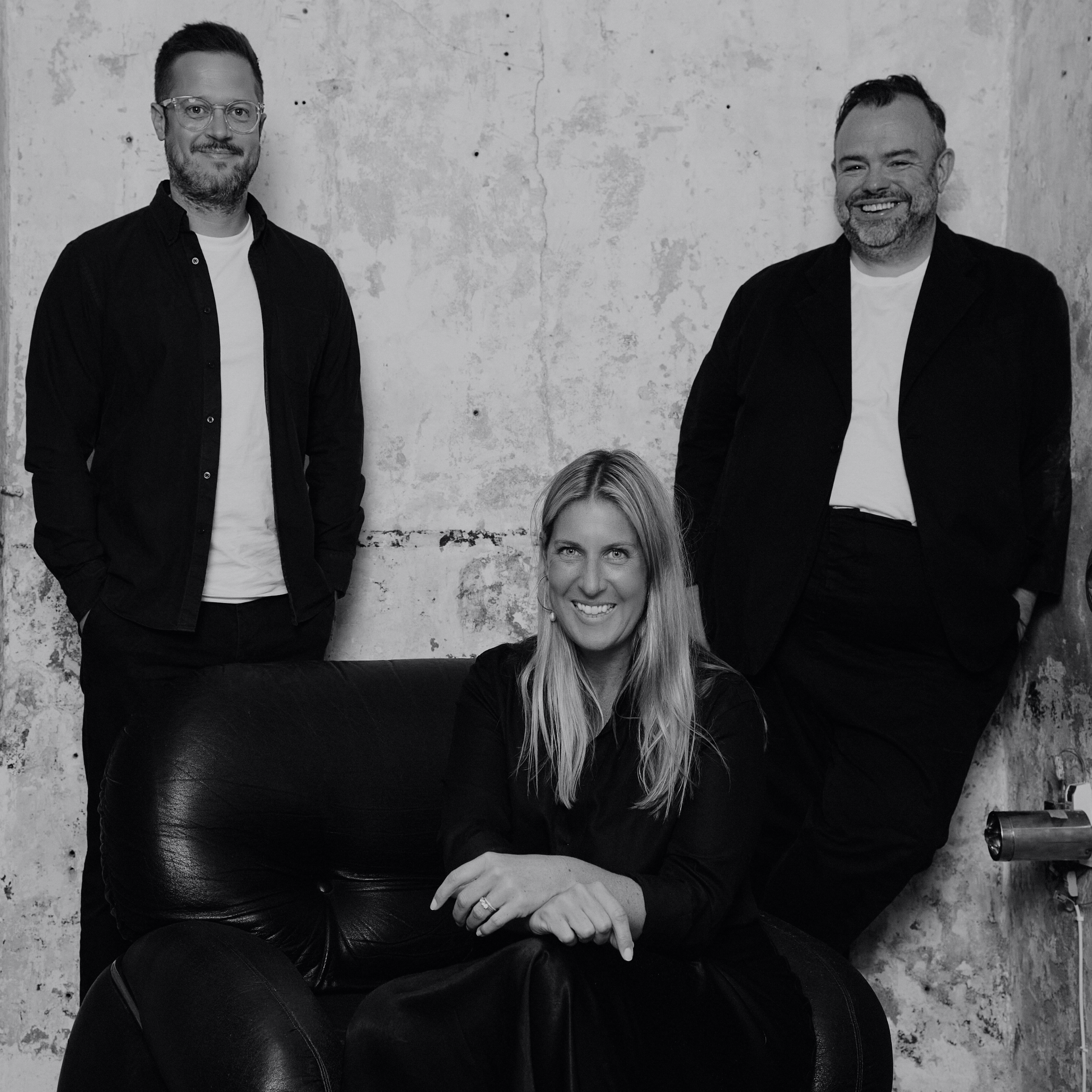
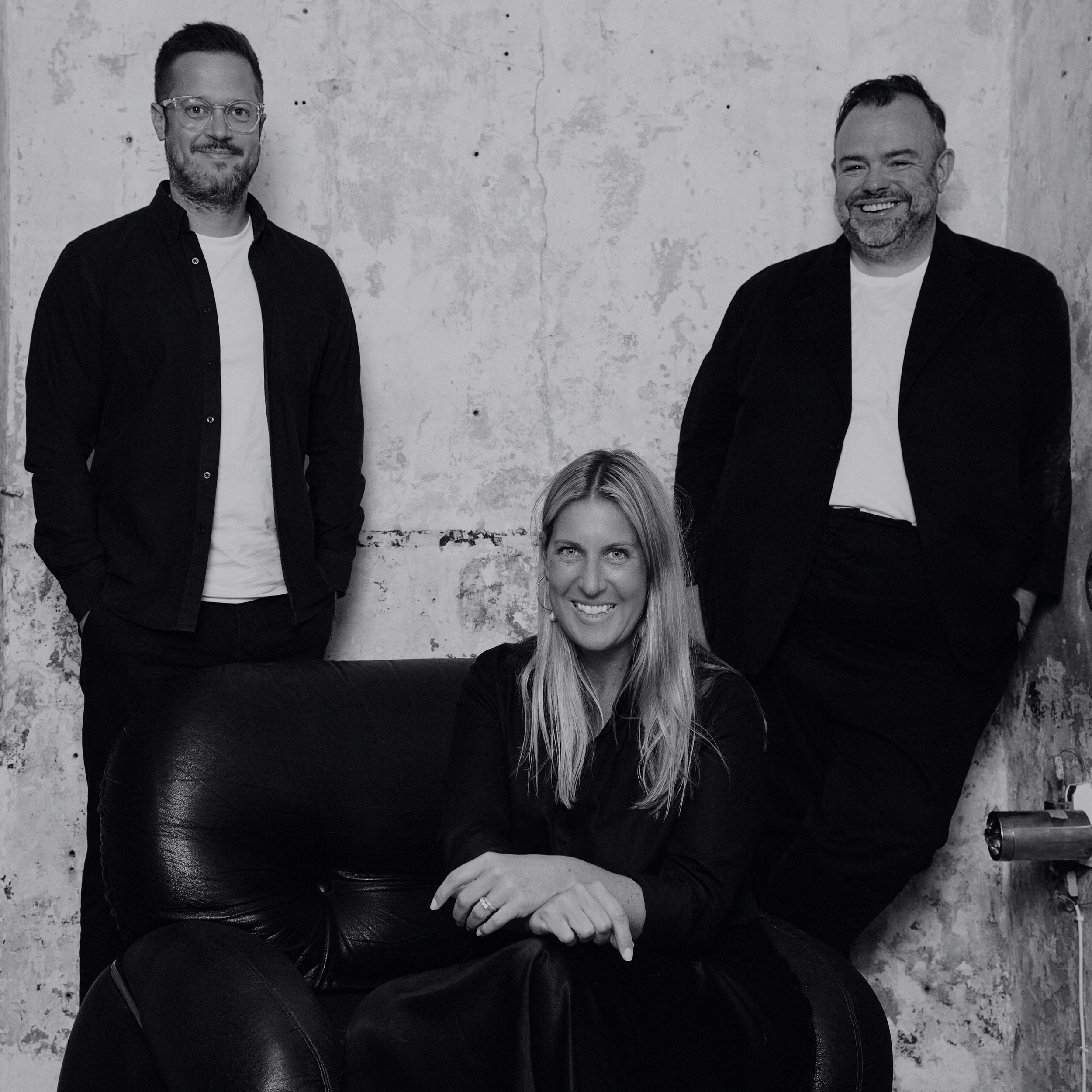
Rick Brim, Martin Beverley, and Polly McMorrow of Ace of Hearts
How alive do you feel?
"FEARLESS CREATIVE LEADERSHIP" PODCAST - TRANSCRIPT
Episode 285: Ace of Hearts
How alive do you feel as a leader?
In this episode of Fearless Creative Leadership, Charles Day sits down in London with the newly announced founders of Ace of Hearts — Rick Brim, Martin Beverly, and Polly McMorrow — for their first recorded conversation as partners. Over the past seven months, Charles has interviewed them individually while they prepared to build something of their own. Now, you’ll hear what happens when belief meets reality.
They discuss why they started the company, the chemistry that binds them, what they’re learning about themselves, and how creativity must be valued differently if the industry is going to survive disruption — including AI.
This is a rare, unpolished look at the emotional and practical journey of starting a business. It reveals how fun, fear, optimism, and ambition shape founding teams — and why starting a company may be the most alive a leader ever feels.
—————
[00:00:00] Charles: Here's a question. How alive do you feel? Hello, I'm Charles Day, and welcome to Fearless Creative Leadership. If you believe that human creativity is the only scalable, sustainable, competitive advantage, then you're in the right place because here we explore how people in all walks of life, from business leaders, to artists, to athletes, unlock creativity in themselves and in the people around them, and in the process how they move the world forward.
This episode's guests are Rick Brim, Martin Beverley, and Polly McMorrow. They're the founders of Ace of Hearts and they describe themselves as a creative company. I've interviewed them individually and collectively five times over the past seven months about their decision to start a business together.
[00:00:50] Martin Beverley: I had a chat with someone the other day who is, they'd been reading this self-help book and the it said, basically, forget happiness. Like everyone thinks it's about that. But if you focus on aliveness every day, then you'll get to happiness. And I was drawing out what I want this to be. Because it's someone that we might work with and they said like, there's an aliveness in this.
Like it's fizzy and it's exciting. And that's what I think we're feeling every day. Like I go home and my wife Emma says, how was today? And I'm like, yeah, those were good today. Like or oh, and she never used to ask me that.
[00:01:29] Charles: The journey to start your own company is unlike any other. It's exhilarating and terrifying.
You're lifted by hope and then drowned by despair and through it all is the desire to find out what you're capable of and the fear that the answer will damage you beyond repair. It's a journey that's never shared with the outside world as it happens. It's a story that's told only once the doors are open, when the rough bits have been filed off.
When the dreams of idealism have been replaced by the reality of Bill paying. But this time, thanks to the generosity and the courage of Rick and Bevo and Polly, I've been able to explore the journey of starting your own business in real time with them. It's an experience that is above all else deeply personal.
So starting your own business, what's it like going through it practically and emotionally? How does your thinking change as reality meets the dream? What do you discover about yourself and what else do you want to find out? What are you afraid you'll find out? A couple of weeks ago, the four of us got together in person in London, and we talked about the last six months.
We talked about some of the things they'd said to me in the earlier interviews about how their thinking has changed, or in some cases, how it has now become edged in rock. This episode is that conversation ace of hearts brought to life. In a world living through change that is faster and deeper than any time in human history, more and more businesses are going to discover that they are no longer fit for purpose.
And as a result, more and more people are going to start more and more companies. The success of those companies will be heavily influenced by the decisions that those people make before the doors are open and by their willingness to look themselves in the mirror and decide how they want that reflection to change.
Starting your own company is the very definition of being alive. Here are Rick and Bevo and Polly, the founders of Ace of Hearts. Rick, Polly Bever, thank you so much for coming on the show. Welcome to Fearless Creative Leadership. This is the sixth time we've talked since I think February was the first time.
Wow. You and I talked. Yeah. And then you and I had a conversation. Then the two of you and then Polly, you were able to join us, um, in May, right?
[00:03:51] Polly McMorrow: Uh, yes. I think that was the beginning of June. Yeah. Just through start. That's right. And then we all
[00:03:54] Charles: met in can. So this is the culmination of that journey and what I'm really interested in understanding is how things have evolved since you started this venture and we started talking about it.
Let me start with a kinda an interesting question. Most businesses start as a partnership. Why do you think the partnership part of this is so fundamental to people deciding, I'm going to start a business? What makes the partnership In many cases, I think the catalyst for starting a business.
[00:04:23] Polly McMorrow: God. So, I mean, it's a great question and it, I guess is the, as you say, it's the essence of any business is the partnership of the people that you have and, and what they bring and, and actually the space that you give each other to be able to do that with.
So for us, it was always an interesting blend, and I can talk about it from my side, but it's interesting Because it'll be different from the boys. For me, the bit that's unbelievably important is do you have partners in it who you can really expose yourself to and be pretty vulnerable with and ultimately really believe in?
Like, do, do you sense a positivity within that, that you go, my God, we're going to have Ros and we're going to have moments in this. And, and all of those things are probably more acute actually in those first few months than, than anything because. The thing that you're creating together is really precious, but it's not one of you, it is the alchemy of the three of you.
And, and not just the three of us, but um, John, our CFO and all the brilliant people that we've got working with us. It is a combination of all those things. So it's so interesting that it's your first question because I think it is the essence of whether or not a business works or doesn't is that group of people.
And it's all the brilliant things that can happen. And it's also like any relationship. It's also the bit that means you can be completely raw and honest. Um, and that's kind of okay. And, and you work out where you can make up for each other or you work out that you're like, God, I thought you'd be a bit more like that.
And that's all right. Because I actually love doing a bit more of this. So there's quite a lot of it that happens. It's a very heady but ultimately quite profound thing I guess that happens to you as a human, as a leader. Um, you know, and as a, as a business partner,
[00:06:05] Charles: would you have ever started a business without partners regardless of who they were?
[00:06:09] Rick Brim: No, because, um. It's just I, my character, I think I, I would've always just gone into a swirling and never got out of the swirl. And I think, I think I need people to sort of pull me out every so often. And that's been the most amazing thing. I think. I think everything along the, this, this, and I hate the word journey.
I hate it, but, but it is really a journey. Everything along this journey, um, has surprised me and, and in the good ways and bad ways and ways that I never expected, I think skills of lies and, uh, lay in different areas and compensating for different things and the lows are really, really low, and I never expected 'em to be that low and the highs.
But on the flip side, the highs are amazing. And the more people that are joining the agency, the more people are experiencing the high. And so the high get multipliers and actually the lows. Get less low because there's more people to share in it. And I think, I think if this, if I'd been on my own, I would've felt everything too intensely.
And I, I, I don't think I could have done it.
[00:07:19] Charles: What makes the lows so much more intense for you now?
[00:07:21] Rick Brim: Because it's yours and we've got an office full of people that have taken a risk, very smart people who have, have, have sort of shunned jobs to come and join us. And you feel a responsibility to them. You feel a responsibility to some of the partners we're working with, the studios, the, the people that are helping us out.
And you really feel that. And then you feel, you feel, you feel it in yourself. You, you, you don't go into this not to win or not to do well or, and, and thereby the grace of God go, go as all and, and some things will come your way and some things won't come your way. And. And I don't want to use all the cliches, but you really do learn.
You, you really do learn how to do it differently. And one of the things that we spoke about, I remember speaking about in one of the previous conversations is the muscle memory of a big agency. The more you go through stuff, the, the further memory that becomes, and I'm really enjoying that. I'm really, really enjoying just being a, being, being masters of our own destiny and deciding what we want to do and deciding where the business goes and how we show up.
And it's, it's, it's, it's great fun. And we had, we had a meeting the other week and we were, we, we decided to completely reconfigure the office. I mean, I, it is, it's a grand to call it grand, very grand to call it an office. We, when we borrowed couches from a, an office that was two door down and we were schlepping them upstairs.
We are walking in with fruit and, and, and there's a bit of a smell. So somebody was going to make sure that wasn't a, and, and, and, and we were, we were in the pub afterwards and, and, and we were talking about, oh, that was a bit of a, and then you, then you realize those are the moments we will never, ever, ever forget.
And it was brilliant. And, and yeah, so, so it is, it is a very enjoyable about what I've done on my own. Now that's a long way to get to that answer. Beba,
[00:09:19] Charles: what have you learned about these two since you've started doing this that you, that you weren't expecting?
[00:09:25] Polly McMorrow: Here we go.
[00:09:27] Charles: Buckle up.
[00:09:29] Martin Beverley: Well, I'll start with Rick because I knew him very well already.
Um, I think what happens though is that because you are in such close proximity with each other all the time, the behaviors become amplified. So I see even more of. His strengths and weaknesses, honestly, because you are, you are really close. There's almost no gaps to like, when you're in a big company, you go and do other things separately.
There are certain pieces of business that I would go and work on without Rick and vice versa. So you just, I think, um, his powers are his incredible energy and his incredible ability to jump to ideas. And my thing is, I just want him doing that almost all of the time. And when he says, oh, I can spiral a little bit, when you have like a, a negative thing or maybe a potential partner doesn't buy the work or maybe you lose a pitch or something, it's how, how do we get him back on the positive as quick as possible?
And that, that's what I've kind of, Because he's, he's triple positive or double negative. And that, and I, I don't mean that to, that's just my honest, it's that bad. Like I just, you, you notice it very, very clearly when it's like right. There in front of you all the time. The thing I've probably noticed a lot about Polly is she's actually, um, actually quite similar to us in that she's a very emotional heart on the sleeve person who has very strong sense of right and wrong and she really cares about the creative work like we do.
And I think it's really nice that we're almost like, I don't like kindred spirits. Because I sort of thought, oh, maybe Polly will be quite commercial and she's very commercial, but it doesn't mean that she's not very emotional, like us too. And I quite like the idea that we have a similar sensibility about things actually, rather than being very different in terms of our values.
I think we're quite similar in terms of our values. So yeah, that maybe I was a bit more positive about Polly than I was about Rick. I don’t know. So he's now looking at me like I'm not, am I double negative sometimes?
[00:11:38] Rick Brim: Um, but like, no, it's a, it's a way more of an intense situation. Mm. You feel everything.
Acutely. And, and, and actually going back to the partnership thing, we've actively spoken about when one of us in a is in a funk, the other two have to be positive. So we've, we've made this if, if it's all right for you to go off and, and have a little bit of a moment, but the other two have to be really positive to sort of drag the person back.
And, and that's not, and and that's all of us. So everybody's allowed to feel how they feel and everybody's allowed to do what they do. And if something bothers them, that's okay. But the other two have to be peppy. And, and also you, you, we go back to this room of people looking at us going, this is exciting.
You, you don't want to, you've, you've gotta move on very quickly.
[00:12:28] Polly McMorrow: There's a lovely thing as well. I just, I think with your point around partnership that. I think we're all, um, doing that thing. If there's a lovely amount of like healthy challenge of the right thing for the business that happens. And so like the boys have talked about, we might have a persuasion, so it might be that one of us really definitely believes that a piece of business is right.
You're talking to a client, you're like, there's absolutely right shape thing or you know, there's a partner that we could work with or a way that we can go and do something. One of the things that I honestly find most enriching and genuinely about this is each of us are allowed to play through those series of emotions.
So one of us might really want to do a thing and go and explore a thing, but the other two, or one of the other two might fundamentally go, I'm not quite sure that's right for us, but there is a sort of, um, let's play it through. Until the point that either actually what we thought might not have been an opportunity, actually is an opportunity or the thing that you were absolutely, definitely sure was an opportunity kind of isn't an opportunity.
And actually it's quite a long way to go for a ham sandwich and suddenly you're like, I'm not quite sure what we're up to. But there is a real, we've learnt very quickly and given that we're three months old, there has been this hot housing of learning to be able to give each other the space, to be able to, as a team, be able to commit to something.
Even if one of us or two of us feel a thing that the other one doesn't. There's a sort of respect. But, uh, like Rick said, it's quite an intentional thing of going, okay, I'm going to tell you that I don't think that this is something that's for us, but I'm going to fully commit to us working out if it is and taking that to the next stage.
And then we get, you know, to the next stage and you have a gate. So, and that again, that to the part of us all, we're stronger as a result of that challenge and we're stronger as a result of being able to work out where our biases might have led us to go. Yes or no. Come back the other way so that it is, it's really playing out in every part of our business.
Mm-hmm. But the boys have talked about, I mean, it is, it's, you know, fiercely personal. The highs are, it's all of it. It is, it is, as we keep saying, it's, um, yeah, it is very personal and it's very enlightening about yourself and, and, and exposing at the same time for good and for bad. Mm-hmm.
[00:14:34] Charles: The, these two had a relationship for what, a decade more?
[00:14:37] Polly McMorrow: Mm-hmm. Yeah.
[00:14:38] Charles: You must have vested these two really carefully. Yeah. And you two must have vested very careful, Polly. Very carefully. Very carefully. How, how has this work compared to what you thought it would be like? How hard or easy has it been to become a three when it was a two?
[00:14:52] Polly McMorrow: The whole, I mean, the boys have said the whole thing is, is is both harder and more enjoyable than you could ever have imagined.
Um, the three to a two thing, I've always worked in threes. You know, I think there's something that's brilliant about the three disciplines coming together. And I've had some wonderful partners in the past who've, who've, um, been sort of, you know, my other, my other two. That's not an issue on the sort of numbering as it were.
You know, I really believe in the different disciplines coming together. But as far as, um, Rick and Martin and them being quite an established duo, which of course they are, and, and I'm, you know, in awe of some of the work that, that they've produced in their past and, and some of the brilliance that they've had.
But part of the generosity of what they bring is that. Is that they create the context and the climate for me to come in and for me to learn. But that's what it is. You are, it's like the start of a relationship. You're learning about each other, and they're learning about me, and I'm learning about them.
So any amount of, as you, as you say, vetting, um, happens almost academically because like any relationship, until you're in it and you're experiencing it, you don't actually see it kind of up close. And that's where the generosity of going, because there's two of them, Rick's talked about the muscle memory of, of ways of working for all of us.
You come into it with certain things that you go, oh, this is how we do it. And then suddenly you're like, shit, no, that's not how we do it anymore at all. That's, you know, that's how I have done it with X team, or that's how the guys have done it with y. So it's a, it's a really, um, inarticulate way of saying you can look at anything, but until you are in it, you don't know it.
But then when you are in it, you get to be. Part of something that people create the space, you know, the boys have created the space for me to be able to come in and be a really meaningful third part of that.
[00:16:35] Rick Brim: I disagree with that. I don't think we've created anything. I think the three of us, I think the most important thing for us has been that, that that geo thing is a thing of the past, is a thing of where we, we came from and, and it worked really well there.
And one thing we want to make sure very, very actively make sure of this business that, that, that is left at the past. And, and, and it's, it's, it's about the three of us. It's about the four of us. It's about the six of us. It's about the people that are coming along on the journey. We've got some amazing people that have, have, have, have said yes and, and, and are, are joining or who have joined.
And, and I think yes, we, we, we existed in a certain way, but that we, we chose to. Leave that behind. And I think it's really important that, that, that, that is left behind.
[00:17:24] Charles: I, I think that's such an important reference point. And I'm also conscious Because we've talked about this Mm. Of the journey that you guys have deliberately gone on to create this connection.
Tell me about burning down the pub and the walk, and the walk that followed it and why that walk was such an important part of this partnership.
[00:17:40] Rick Brim: So burning down the pub was, um, we went away for an evening. Um, and we went to a pub. We, we, we went away and we stayed over this, this pub and it had a very big fire.
And I got a bit carried away by putting logs on the fire. A
[00:17:56] Polly McMorrow: bit carried away. A bit carried
[00:17:57] Rick Brim: away. And, and it was, it was a very trendy pub. So, so, so the people that worked there were very trendy, but, but, but also, um, quite quick to tell you when you're doing something wrong and somebody comes to me, go, did you put logs on the fire?
I was like, yeah, yeah. Anyway, we, we, five minutes later I ran outside and it was spitting out sparks onto its, uh, thatched roof. The next thing you know, there were five fire engines. It's such an H engine, and the pub was, was completely evacuated. And, and many, many, many stories including going into the pub next door the next day, and the barman going, oh, I always saw you last night.
I was like, did you? He goes, yeah, I was one of the firemen. I'm like, but you're a barman anyway. Um, but, but we, we went away for the evening and, um, we got very drunk and we, we spoke about everything. Um, and then, and then the next day we were a little bit hungover and Polly said, we're going for a walk. And I think me and Bev were like, we don't want to go for a walk.
And it's like, we're going for a walk. And we went for a walk. Probably not as long as we should have gone for, but we went for a walk and it was very much about, um, designed to talk about anything that's uncomfortable or anything that, that, that we needed to talk about, but couldn't sit across a table or couldn't sit across a coffee and say, so we all walked next to each other and just spoke about things like.
Financial things and, and private things like, like, like financial needs and health needs and things like that. Things, things that you, you, you don't discuss in a professional environment apart from people you go into business with and, and partnering with and, and, and, and it, it was that conversation. But what that allowed us to do is have very frank conversations and we, we, we've had, we've had some very frank conversations about how we think the business should go and how we need to get course correct and how are we going to tell people that we didn't win a piece of business and how we're going to tell people that we did win a piece of business and, and.
It was a real sort of, yeah, we will always look back on that as burning down the ball. It's
[00:19:56] Charles: such an important part. Yeah. Building a partnership and a new business. I think, because whenever I'm working with people who are starting their own company, you know, the one, the one piece of advice I always give them is talk about how it ends.
Everybody gets caught up in the, the, the romance literally writes a marriage, right? I mean, you're falling in love. Yeah. You have to. Otherwise you wouldn't do it. But nobody ever talked about how it ends. And if you do talk about how it ends, which is essentially what you guys were doing. Yeah. Right. You get to the issues that are important stuff, like mm-hmm how long do you want to do this?
Versus how long do you want to do this? Versus how long do you want to do this? That's catalyzing and, and the honesty and the confidence that that creates and the trust that that creates, um, I think is really powerful. It's hard. It's hard. It's really hard. It's essential.
[00:20:38] Martin Beverley: I do think, I mean, I don’t know if there's any science behind this, but the, the three is a magic number because what three does is it allows you.
To sort of disagree and one person kind of mediate. Yeah. So you can, I've sort of enjoyed that and I have bored a lot of people at Ace of Hearts about my triangles theory Because it's like the strongest structure in nature. And if the three of us are really strong and we can lean on each other and we can work together on to do each other's work as well, then we can almost replicate that model with others.
And I think, I think we're, we are, we're getting stronger over time as that, um, triangle. And I also never want us to not be able to disagree because that's so important. It's so important. There's um, there's like a, I'll butcher the quote, but it's an old William rig Wrigley quote where he talks about, and it's all time.
It says, uh, if two men always agree in business, one of them is unnecessary. And as if we were always just agreed all the time there, you know, and we are quite agreeable people and I think we always worry about how the other will be feeling. That we have to be able to say, oh, I think this is the direction we take, or I think we need to hold on that and just push each other.
And if we have that as a partnership, I don't, I think that will stand us in instead.
[00:21:57] Charles: Is there anything any of you haven't said yet that you, that you wish you had? Please feel free to use this opportunity in front of the general public to say it.
[00:22:06] Polly McMorrow: No, I don't. Uh, from my side, no. I think they're exactly like Martin and you know, like we've got, like we've said, the, the thing that we're finding is our rhythm of surfacing them, you know, the right time, the right moment, the right place.
Sometimes you think you wish you could have said something earlier or you go, God, actually I felt that, but I didn't say it. Or actually I didn't feel like the right. So those things you kind of get to, but no, there's nothing I wouldn't genuinely, there's nothing I wouldn't say to Rick and Martin about it because again, it means too much to not, like there's no, it would be nonsensical not to, even if it's something that isn't a concern.
In, in material ways. If you don't say it, then you've got no chance to rectify, to move it, to make the impact that you think you can with it. So
[00:22:50] Rick Brim: I think to answer that, things come up along the way and I, I, I had a, a thing on Friday where maybe it was a part particularly bad day or I'd had, and we were talking about something and I, I, I maybe went a bit strong on something and on the way home we sort of reflected on it.
Like maybe I went a bit hard on that, but it's being able to, to sort of go, ignore me. Let's talk about it on Monday, and not, and not losing face and, and, and having an enough of a, a, a, a relationship where you, where, where that, that's completely allowed to happen as long as you acknowledge it and as long as, as long as it's a, it's a thing that we actually agree to.
Okay, let's, let's start again and start, start talking about this because I, Because, and, and having that safety, having that safety of, of. Almost family like, like whatever happens, it's fine as long as we talk about it. And it's not just the three of us, it, it's really important to note that, that we have, and as we always wanted to be way more than the cult that, than the, the agency founded by the three of us.
We've got some brilliant people helping us do it. And, and the effort that people are putting in and the care and the attention, it's, it's amazing in, in an environment. We were talking, obviously, we found our, our local pub and, and um, it's really interesting because you, you talk to people in other places and you talk, and our challenges are very, very different to some of the challenges that are going on out there.
And I realize that the industry is in a massive state of flux and there's some very scared people out there and there's some very excited people out there. Everybody has their own different things and I don't feel cocooned from it at all. I feel very exposed to it, but I feel way stronger sort of windmilling into it, just sort of running into it because we've got people there that is like, don't worry, don't worry.
We've got you, we've got everybody's there feeling the same thing. Nobody, nobody is along for the ride. Nobody is above anything. Nobody is above going next door to m and s to get biscuits for a client meeting. No, nobody. And, and I, I, I love it. It's, it's, it's, it's, it's a rock up every day. You dunno what it's going to be.
But you know, it's going to be fun.
[00:25:15] Charles: Well, I think when you're dealing with massive changes, all of us are, right? Mm-hmm. I mean, politically, socioeconomically, technologically,
[00:25:23] Rick Brim: whether you've got biscuits from m and a.
[00:25:25] Charles: Exactly. Uh, the thing that we all yearn for, I think as a species is to have agency. Mm-hmm. And I think when you own your own agency, you have agency by definition.
So picking up on that, and going back to the point you were making earlier about the triangle being essentially the sort of the cornerstone, the foundation of the, of the structure. I want to just feed back to you something you said, um, in one of our earlier conversations. Oh God, uh, this is your life. Um, you said this.
I think the idea of finding people who have different experiences to us and have grown up in different places is really important. because I'd really like there to be a sort of healthy disrespect for us. And what I mean by that is we don't necessarily know what we're doing. So people can come in and bring what they did in other places to us and challenge the way that we think things should be begun, should be done.
And together we decide the best way. Four months in, five months in, do you still feel that way? Are you still interested in being, I mean, I know you used the word deliberately, but disrespected.
[00:26:23] Martin Beverley: Yeah. Uh, I would love us to stick to that.
[00:26:26] Charles: Yeah.
[00:26:27] Martin Beverley: Like,
[00:26:27] Rick Brim: that's
[00:26:27] Charles: brilliant.
[00:26:28] Martin Beverley: Might print it out. The, um, the, the reason being is that, I don't
[00:26:31] Rick Brim: think you said it.
[00:26:32] Martin Beverley: No, I must have said it. Charles has got it there. Um, because Rick talked about muscle memory and we know the way that we work. If we are constantly challenged and there's constantly a different way to look at it. It's not to say that we will always go, oh, that's better or worse, but it will make us better because it'll get us thinking.
So some of the hires that we've already made, I think, adhere to that very, and some of the hires that we are hoping to make soon definitely adhere to that. So they are not what you'd expect. And they're quite experimental and they sit outside of our comfort zone because I think we'll get better if we do that.
So yeah, I definitely stick by that.
[00:27:14] Charles: So I'm a pragmatic, romantic. I love this conceptually.
[00:27:19] Polly McMorrow: Mm-hmm.
[00:27:19] Charles: I've also seen a lot of times where leaders fall on the wrong side of that equation and stop making decisions. How do you balance that? Right. How do you balance this very open, vulnerable, confident, frankly, perspective, which should be celebrated with the fact that some point you have to step in and make the call.
[00:27:40] Polly McMorrow: Yeah. I mean, look, there's no. I, I am a firm, well, I think we all are, but firm believers in, in leadership in a way that is decisive. Um, but also open. I mean, interestingly in that you say, you know, it's not, it's not about going that's the abso that's necessarily the absolute right approach. But what it does is it creates an environment where challenge is welcomed and it means that you, you know, forgive the phrase, you tire kick, you do a thing where you go, actually, is there a different way?
Is there just a completely different reimagined? And we've all sat in reviews or anything where, where sometimes a completely left field comment can completely reimagine the very nature of an idea that you're looking at. Uh, it's the same thing with a business, which is everyone's opinions are not just welcome but valid.
Mm-hmm. It's just. We are able then to be able to debate it and go, God is there an, and ultimately we will take a line in it and go, actually we believe that for the right thing in the business. But I think for me, the final bit just on it is, I think the, the communication part of it is the bit that is important for the leadership, which is those brilliant there you get surfaced, you debate it.
Ultimately we will tend to make a call on that, but then communicating why we've taken that call however difficult. And sometimes you're taking calls that aren't totally comfortable about it or aren't exactly in line going, and this is why we've done it because we believe X or because we want to be completely transparent.
And we foresee at some point in the future this might happen and therefore we're going to date it. But we're also open to to reviewing it and we can also do it. So there is a lovely tension about it in going, you gotta create the climate for that fierce debate. And that's a very, it has to be there, but that's not an abdication of.
The necessity to make clear choices and to be decisive about things. And then to give yourself the freedom to be able to read, you know, ate it and renegotiate it or rethink about it because these things aren't fixed. That, you know, you, one decision that you make now might be incredibly relevant in two years time.
Mm-hmm. And it also might have been completely disregarded in two. So the ability to, to adapt to the different TimeScapes and horizon lines and debate is important.
[00:29:58] Martin Beverley: The, the other thing I'd add is probably when I said that, I was thinking more about how it'll benefit us, but we recently managed to hire someone who has come because she said, I want to be part of shaping this and I can see that you are open to us shaping it.
And so for her, that was a major reason to join Ace of Hearts rather than go somewhere else where it's already established. Yeah. There's a hierarchical structure. And she was like, I can't believe the body language that you guys have where you're very open to, what do you think about this? Or what would you bring?
And so I think it works both ways. I think the best talent will want to shape something, not just be told what to do.
[00:30:35] Polly McMorrow: Mm-hmm.
[00:30:36] Rick Brim: I think also that we, we, we are, one thing that's become very apparent throughout the whole process and terrifies me is when they ever, when everybody ever meets us, it's like, we're very excited.
This is amazing what the industry needs. Can't wait to see what you do, and there's the can't wait to see what you do. Everyone's watching what you do. That, that, that ultimately makes me feel a bit sick because they, if they just stop at a third bit, don't, don't go into that bit, but we have got something to prove.
We definitely have something to prove. And, and, and that is probably different from when we last spoke, that the, the, the, the acute sense of we have got something to prove. And, and the book does kind of stop with us as people and, and, and that, and that need to. To sort of, if everything goes well, then it's the gang of people then, then it's, then it's the ace of hearts and it's everybody there.
If somebody needs to take the blame, we need to take the blame. Um, and I think that's, that's really important. So, so, so, so we are, we've all got something to prove. And, and when you've got something to prove, you have to make dec you have to make decisions that may not sit comfortably with people, but when we win, we win together.
And when, when, when, when someone has to take the blame, it has to be or has to be.
[00:31:56] Charles: So, so this is an ethos that really, I mean, every business is dependent among the quality people they hire. But this is an ethos that really, really puts a high bar on the kind of people you hire. I want to read something back to you.
Hmm. That you said about this? Because I think it'll speak to the journey that you guys have been on. I think so. We, we were talking about how do you interview people in a way that actually allows you to figure out are they a good fit or not. Mm-hmm. I think it's one of the vulnerabilities that most companies exhibit.
I remember when I built my company, I spent all my time telling them how great we were and forgot to figure out whether they were a good fit. And I've seen this over and over again. So we talked about that. You said, what I've actually found hard with this is we can't really say much about who we are because we still don't know what it is.
I wish we had our two or three one-liners to go, it's this, it's this. But we don't, it's really intentionally not to have those things because we want to develop them over time. All we know is we want to sit in a room with smart people, with business problems at the center of the table and find interesting ways to solve them.
That's all we know. That was April, I think you said that. How, how has it evolved for you? Like where are you in that continuum now? It's
[00:33:03] Rick Brim: not that that's, that's still. If anything, we feel that we feel that stronger. And actually halfway through we went away from that little bit. But as Bevo said, we've got some amazing people who are going to come along with us on this.
And, and it's, it's the, it's the conversations around that that, that business problem that will differentiate us from other people. I, I, I, I don't think we were talking, um, to somebody the other week and, and we tell, we were sort of talking about what we're about and, and he questioned how revolutionary it was.
And it, it wasn't about whether it's revolutionary or not, it's about how we do it and, and the people we bring along with it and the way we, the, uh, our mindset, it's the open-mindedness that we bring to that, to that table and, and, and, and the sort of people we want around the table that will, that'll d distinguish us and differentiate us from what, what's gone before.
And that's all we have. I would say.
[00:34:00] Polly McMorrow: I also think, I mean, I still, you are putting a business. Challenge at, in the center of the table and having those people that bit we've never wavered from. And as much as I think it's the, uh, crispus articulation of how we sit in the market, which is, as you say, it would be actually, it would be arrogant of us, I think, to sit and say, do you know what, it's all like this.
And it's all new. And by the way, no one's ever thought about it before. And you know, really we're going to take a completely different stance. As Rick said, we believe we have these unbelievable people who sit around the table alongside some really brilliant partners in business who want to be able to do that.
And three months in, I think it's, we've already benefited from so many brilliant and enriching conversations where that's been incredibly, uh. I think just in lighten that light, it's just been a brilliant part of our business is exactly that business problem in the, I mean Vavo is, can unpack, you can probably unpack the way that we think and our sort of way of approaching, but we always start the business, always start with the business.
That's where we start. All of everything comes from that position and that's why the very first way that Rick's articulated that does definitely stay true to who we are.
[00:35:18] Charles: Picking up on that, and not to leave you out, I think it'll be unfair to leave you out. Um, we talked about early on, we talked about what are the things that you want this to, how do you want to remember this essentially, right.
What is it that you want to be able to look back on? And you said, I want to look back. You said this. I want to look back and think or feel really proud in 50 years time of the impact that we had that this business had on the world. And it's too flippant to say we had a lot of fun doing it, but I think it should be that we did have a lot of fun doing it.
And I think it's that everybody who intersects or interacts with us in any way looks back at it as a fiercely positive experience as well. Whether that built their business or their career or their life. Is it fun? Is it as fun yet as you want it to be? Can you see ways to make it more fun? And we talked a little bit about putting fun into the p and l, into the balance sheet.
Mm-hmm. Have you, have you evolved that thinking at all since, since you said that to me?
[00:36:14] Polly McMorrow: Oh, is it as fun as it could ever be? No. Because I think you should always strive to create more better environments for people to be able to do that. Uh, yes. I think that we have, and we've all talked about it, this unbelievable body of people who frankly is such an important part of that.
Um, yeah, the intentionality of fun and the sort of inver cost of fun is, is true. It has to almost be the start point of anything. And Rick talked earlier about, you know, a Monday morning meeting that we have and a, and a status meeting where we go through, where we sit on everything that sets us up for the week.
And we love that. Like, honestly, there's, I think there's not a person in that room who doesn't find it incredibly energizing. And I think that's, I guess the, the, the switch that I would wait, which is fun. As I obviously said at some point in my history. It can feel too flippant, but I think it's on us and everybody that's within the business to intentionally bring that to bear in a way that makes us better, stronger, more interesting, more interested, uh, in everything that happens.
So have I evolved that thinking in a precise way as you all sense? No. Uh, do I fundamentally believe that it is part of our business? Yes. And do I want us, as we move forward to make sure that we can. Point at things and talk about the tangible impact of that fun and enlightenment on it. Ab absolutely, a hundred percent.
Yeah. And I think the part of that in business, the part of that in people's lives, you know, people aren't going to stay with us for the next 25 years. I, I really hope they will, but they probably won't. And I do, I hope they look back and go, God, that was incredibly enriching. I, I look back at it as a hell of a time and, you know, that really allowed me to be able to stretch my legs on things and to take a big old leap into the future.
So, yeah,
[00:38:15] Rick Brim: I I think also, Because it's yours, you're becoming incredibly personally attached to things and, and you immediately assume that, you immediately assume that everybody isn't having fun. And, and when I've spoken to anybody, I don't think there's anybody there. That wants to leave or there isn't finding it?
Well, only three months. Oh, yeah. It's like, unless there's something you want to tell me the
[00:38:36] Polly McMorrow: room or
[00:38:36] Rick Brim: No, no, no. I, I don't think there's anybody there that wants to leave and I don't think there's anybody there that's not finding it rewarding. Yeah. Um, and that isn't a prompted sort of, I'm not doing that thing.
You did a part of that. Are you having a good time? You, you just, you just get a sense, you just see how people are showing up. You see what people are giving. You see the nth degrees that people are going to, you see, you see the WhatsApps and you see the messages and you see how people are, and you see how people go to lunch together.
I, I think, I think it's a, it's a rewarding experience at the moment for people. And that's, that's all we can ask for. There's also, you
[00:39:12] Martin Beverley: want partners to feel that when we show them our ideas and on Friday Yeah. Someone went, that was loads of fun.
[00:39:19] Polly McMorrow: Yeah. Yeah. We
[00:39:20] Martin Beverley: were like completely unprompted. Yeah. Yeah. And.
That's, I think what we want because it, it's more fundamental than that. It's like then everyone's in a playful mindset of sort of experimentation and we've all been in relationships with like clients where it becomes just quite serious and it's quite, you're just trying to give them clenched. Yeah, clenched is a good word for it.
And we just don't ever want that because I think partners are attracted to that sense of they're having fun with my brand and business. So I think it is sort of weirdly more fundamental. But I think we've all talked about fun at some point. Because also,
[00:39:54] Rick Brim: yeah,
[00:39:55] Martin Beverley: life's too short. If you're going to spend a lot of time at work, like you want it to be fun and it, you can't organize it.
It's just a natural, organic thing. But I do think a lot of it can be inspired by our output as well.
[00:40:08] Rick Brim: And the best creative companies, I'm not just talking about advertising you, you, they have produced the their best work when people show up wanting to be there.
[00:40:18] Charles: For sure. Yeah. The sense of personal connection Yeah.
Is critical. I mean, we've seen this more and more and more, both observationally and through, um, a diagnostic tool that we've built actually. Yeah, you can see, you can measure through data when companies. Create connections with their employees. Their work is more creative, their output is more creative, whatever it is, whatever, whatever expression of creativity they manifest.
Mm-hmm. Let's talk a little bit about partnership at the client level. Each of you, I think, in different ways, we've talked about that to me over the last few months. How do you create relationships with clients that are more about true partnerships? Right? I mean, you mentioned at one point the kinda the subservient nature.
I think you also said it to me at one point, there has been for years now, decades in this industry, a real service mentality, subservient, right? I mean, it works badly. It's built into the economics of the industry, which have to change because AI is going to wipe those away. Mm-hmm. How are you going about establishing partnerships with your clients as opposed to vendor relationships with your clients?
[00:41:21] Polly McMorrow: I'll go first, but as you say, it's something that is in all of us. For me, so much of it does route back to the commercial value of ideas and the value of our, of a partnership to, to use your language. You know, it's not a sub. We don't, we're not a supplier of creativity, partner in creativity, and we're one that we believe impacts business and bottom lines.
So in that respect, your point around the commercial models that we have, and we spoke about it before, is interesting as a. Note of the clients that we are working with, of the partners that we are working with now, almost all of them have an unorthodox commercial model attached to them. Whether or not that is a subscription against an idea by, into an A platform idea.
And then for the number of years that you use that there is always a locked piece on it. Alongside the deployment of that idea, one can rise and fall with a media plan or, or dependent on where you want that to live. The other bit is locked because, and Bevo can talk endlessly about this, the impact of compound, you know, the compound impact of having something over time.
That should live like that, that idea should be valued like that. It's more valuable. The longer that you have it, the more valuable, the more that it impacts your business. Um, and others are to do with actually where ideas are traveling across the globe in different markets and other ones are much more hard lined against the metrics of the business.
Whether or not that's total sales, whether or not that's share voice or, or any of the sort of marketing or broader business metrics we want to do. But the reason I say that is every single one of those partners that we're working with in that way understands that they understand that this needs to evolve.
They understand the value of creativity in different ways. We've just. Brought that to them and debated it with them in interesting different ways. That's meant that we've done those commercial deals differently, and in doing that, you revalue creativity, just the default nature of it is suddenly the value and, and the evolved value of it changes.
Can I interrupt? Yeah. Is it
[00:43:39] Charles: easier to do that when you are new, when you are not encumbered by, well, they got this deal, and so why, why can't we operate under the same basis? From a client perspective, are, are you finding that you can build a different DNA because you're doing this for the first time as a, as an entity?
[00:43:54] Polly McMorrow: Yeah. I think, I think the reality is yes, probably. I think you have to want to, you have to understand the difference, but inherently, so many businesses are built. Their, their, you know, their blueprint, their sort of circuit board is based off hours. Plus if you start to look at the utility of people within a business.
Then you can only have a value off utility within a business that that's, it's sort of so predefined and it's so entrenched in so many businesses. And I guess if you go back 30 years, that probably was one way of valuing creativity because it was during a time where perhaps partners were prepared to pay more.
Perhaps there wasn't quite the scrutiny on exactly who was doing what and when. And so it was a model that worked then. The reality is now, I don't believe that it is a, a model that works, and we don't believe that that's a good way of valuing our people because as we've talked about, our people are our product.
You know, our, our people go up and down in our lift every day. Like they're not, that, that's not a sort of module that you can put into an Excel. So I do think it's easier because I don't think you are trying to balance the books of your business through it. So I think it's hard. It's hard if actually the entire economics of a business is predicated on one thing to talk.
About how you want to move it forward because you're sort of still trying to balance it. So yeah, I do think it is. I don't think it's impossible by any means, and it means that all the way through a business, you have to be prepared to double down on that being different. But just like I believe we value creativity differently.
I believe that we value our humans differently and therefore you have to change a model to be able to service those two things. It becomes a business imperative for us that it's done differently.
[00:45:31] Rick Brim: I'm going to throw something back at you that we've spoken about in the past, but it
[00:45:35] Charles: seems fair, turnabout
[00:45:35] Rick Brim: seems fair play.
I think, I think what Polly's just spoken about is being you and, and being, having the agility of being you. We spoke about this sort of hypothetically in the past about how the industry is at an AFF inflection point and how the industry is changing and how um, the needs of modern marketing is changing and where creativity sits in the food chain is changing and it's never been.
More exciting in this industry and more terrifying in this industry. And being a new player in that is, is very exciting and also terrifying. But what, what, what we're not doing is we're not retrofitting to old models. We're not trying to get match fit by putting square pegs in round holes. We're not lying.
We are not, we're not going, we're not going, we can do this but can't do this or, or it's all about the media. We're all about it. It, we, we are not, we're not betting on black or we, we, we are sort of shape shifting as we go along and the amount of conversations we're having with clients, we go, we can be whatever you want to be.
We can track the talent that we, whatever you need. So if it, if you want to be this, we can, we can shape shift to that. And, but what you do at what you get at your core is really solid strategic, left field creative thinking with a strong business sense. And that, that has been, last time we spoke, we were talking hypothetically.
Now we can most definitely say that that's what we're doing and it's brilliant. It's really interesting Because you're not, you're not fearful of what's coming down the line. You're not fearful of what's our AI offering and, and we need to have an A and we have got that for people who want that. And, and, and it's, it's a credible one.
It's not something that's, that we've had to acquire or buy or fit into a, into a different shape. Mm-hmm.
[00:47:30] Martin Beverley: Yeah. I think when Rick says we we're not lying to people, I think there's something kind of lovely and we, when we're telling the truth to our clients, like quite honestly, and hopefully quite humbly and we don't.
We're not forced to solve the problem in a certain way. So if you're an advertising agency traditionally, of which I love advertising agencies, it will be part of what we do. But when a partner comes to you, you tend to recommend advertising. Like you ask a fishmonger what's have for tea, here's a lovely fish like, and I think what we are able to do now is recommend lots of different types of solutions to the problem.
So we had a meeting last week where they were very clear on their business goal, like crystal clear. They were like, this is how we're going to grow and we're going to sell the business at this point. And we were able to talk about when advertising might kick in, but actually partnerships and pricing and the different kind of the way that their product even shows up.
We were able to talk about that in the whole, and I found that really energizing because then I feel like I'm genuinely doing the right thing by them, not just trying to pedal the thing, which I know is the thing that. We do at its core, you know, we're being honest and I, and I personally love that, love that as a position for us.
[00:48:43] Charles: I mean, one of the reasons I wanted to have these conversations with you guys, I mean, we've known each other now intimately for a long time known, gotten to know you through Rick, and then hearing about you. I, I don't want to put too much pressure on the three of you, here we go. But you are the most visible, and I think in many ways, the most important creation of this industry because you are arriving at a time when the world has started to change.
You are not encumbered by old models. You have the talent and the experience, the perspective, the humanity, especially the humanity, to be able to do the things you're talking about. I mean, one of the reasons I think it's interesting to just ask you whether you still feel the same way about stuff is because I was pretty sure you did.
You're substantive, right? You're not fickle, you're not you, you're not you, you're not, you're going to, uh, say one thing today and another thing tomorrow. All of that to me says. You guys building a company that works for all the reasons you've described and probably others that you'll figure out is really important because this industry needs a reference point for how to do this.
It really does. I think this, I I, I Sorry to put the burden on you, but
[00:49:51] Rick Brim: No, no, no, no. It's fine. And I, I, I'm, I, I, I, I disagree with you a little bit. In as much as there's been some very impressive companies that have been founded in the last, well, I think mischief is an, is an prime example of that. And, and we talk about 'em a lot as people that we admire because they look like they're having fun.
They not taking it too seriously, but they're playing, they're, they're open things in the AI space. They've opened things in the media space. They're doing venture, they're doing the kind of things we would love to be doing. I mean, they're doing it with a, a levity and a, a sort of lightness of touch and a, yeah, I, I, I, I think, I think we, we follow in, in.
Slipstream a little bit and, and we will be different. We will be different because, but there as a modern comms agency, I, uh, or a modern creative company, I don't think they're a comms agency. I think they're a creative company. I think they, I think they're, they're a real shining example as well.
[00:50:46] Charles: As you mentioned, you've described yourself as an agency a couple of times today.
Do you see yourselves as an agency?
[00:50:51] Polly McMorrow: Uh, I think we're a creative company Because I believe that there's more at parity. I just think that the sort of, um, it's interesting you pick up on it, sort of semantics of language though, I think. Mm-hmm. That these things are probably very important and I think we are a creative company.
That's what we are. We're a business, we're a creative business. And, and that's because I guess it speaks back to the commercial piece, which is, we're. We believe in what we do. If we didn't, it would be very nice, you know, coloring in or it, it doesn't have a value. Ours has a value. It is a business because it has a value and not because the business of efficiency, because the business of excellence and because the value exchange and because of the impact that it has.
Uh, so it is definitely a company and a business and I want, yeah, and I think that gives us permission to do the things that Rick's talked about, which is to play in some very different spaces because that's frankly what good modern partners need. They need us to have a point of view in all those places, and that's what we're building ourselves to be able to do.
And we love to think about it as we've had these unbelievable histories with our various pasts in a previous chapter. And we are now at the start of alongside a couple of brilliant businesses that we're quite envious of. Um. Part of the next chapter who carry and embody a different vision, a different way of being, a different way of charging, a different way of tipping up.
And the good news is certainly from, from our side or, and I'm sure from theirs, the, the partners in, in who we are talking to share that they get so excited about it. And I think I've been involved in several debates historically about whether or not it's, you know, whether or not agencies have, uh, brought this sort of pricing problem among themselves.
And actually, is it, how much is it that clients do or don't want to buy into it? Our experience is that you have a good debate with, with any of our partners about what we want to do and we want to take their business and what we want to do with them. They're as open as anyone to interesting different ways of.
Trading those things and, and valuing those things. So yeah, we want to be part of the next chapter, not, not the sort of last one of, of the last chapter. Um, and so I think we will have, you know, other, other companies that we look to that we go, God, they're doing it brilliantly and we get excited about that.
We get excited by that. And that healthy jealousy or healthy sort of envy is a brilliant thing. We hope that quite quickly we will be one that, you know, they look to as well.
[00:53:23] Charles: And part of that obviously is picking the right clients to work with, right?
[00:53:27] Polly McMorrow: Yeah. And
[00:53:27] Charles: being selective, and not just being selective, but being clear about what are the qualities and characteristics you're looking for.
[00:53:33] Polly McMorrow: Yeah.
[00:53:34] Charles: In that, in those relationships. You've all talked about creativity. Obviously the four of us believe powerfully in it. Can we just talk about what is the value of creativity from a business standpoint? Because a lot of people have talked about it and a lot of companies holding, uh, um, holding company agencies are always talking about, you know, the value of creativity.
How do you guys. Convince clients to invest in creativity. Why is creativity so important if you're driving business success and performance for your clients?
[00:54:10] Martin Beverley: I mean, broadly it's because, uh, creative companies and creative brands are, are worth more commercially.
[00:54:17] Polly McMorrow: And how are you defining
[00:54:18] Martin Beverley: creative companies and creative brands?
Well, so I think a brand that does things differently and that solves problems in a different way can ultimately charge more money and be worth more money than the competition. So we hope that every brand that we work with will be the distinctive brand in its category that does things differently, is more creative, not just in its advertising, but in everything that it does.
Oh, it shows up so that it, yeah, so that it becomes commercially more valuable and I think. That's something which we just passionately believe in. Um, and, and we've seen in our careers. When you work with a brand that embraces creativity and does things differently and shows up in the world in a way that engages people and is distinct from the competition, they are worth more money.
They can charge more money for their product and brand, and they're ultimately worth more money in the bigger, wider world of commercial. So that's what we want to do for, for our partners.
[00:55:14] Rick Brim: And it's not us preaching that, and it's not this industry preaching that. Actually what we found really interesting is when we go out of the industry and we, we've, we've spoken to founders of com of companies, they describe themselves as business people.
They describe themselves as entrepreneurs, and you ask them what their key attribute is. Nine times out of 10, it'll be their creativity. Nine times out of 10 it'll be their creativity. And, and so, so creativity is being held as such a, as such a strong and, and. Powerful attribute within the business world of, of people who are founding companies, people who are, who are going into markets and saying, okay, how can we do things differently and how can we look at things?
And then actually companies that have already been founded, it, it seems to be way down the food chain. And, and so you've got that, you've got this really weird, sort of complete polar opposites, yet people are, they're worrying ab all these companies are worrying about those companies. And actually why those companies are winning is Because they've been founded with creativity.
It's, they're very hard and challenging thing. And so those companies need to fight back. And, and, and that's where we see all this, this, this happen. And it's not, um, the coloring in which is, which is back to the service thing where we've become. So, so whether it's an agency, maybe that's just muscle memory from where we've been.
Um, but, but we, it is very much a company. We, we do see it as a creative company and, and, and com. Company implies business. And I think, I think we are in the business of creativity and the creative and creative solutions. Not, not, we are not artists, we're not, some, the client may want that, a client may want a bit of entertainment.
The client may, that may be the right answer for them. But it also may be that how we, how we think about the supply chain or how we think about the staff, how the staff engage, or how we think about, do they go from this sort of big company to this sort of company And, and, and it's everything in between.
And advertising is part of that entertainment's part of that social, it is all, it's all, it's all just a big sort of, sort of toy box that you'd to pull different bits on.
[00:57:23] Polly McMorrow: I think though your, your question around how you, that linked to the sorts of clients, partners that we work with, the thing that I think we all hold ourselves to account on is, uh.
Bevo just talked about an example last week where they're talking in incredibly candid form around their business metrics. Do they want and will, are they willing for us to be able to have a point of view on their business of which we will bring a creative solution to? Or actually, are they asking us to supply some ads?
And it becomes quite an interesting way of calibrating who the right partners are because it'll be easy for us to sit here and say, we're only going to talk to clients who look like X or who present like y. And the reality is, so often it's absolutely, as you say about the company we keep and the the partners that we want to work with.
But one of the most important parts of that, are they truly wanting us to be partners in their business? Because that's where we're going to have the most potent impact. And so you have find yourself, and I think we've spoken about this before, having quite interesting conversations with brands or businesses that we wouldn't naturally have run at because we can have some really interesting.
Conversations around their logistics, their supply chains, their future growth, their own business mechanics, the way that they want to evolve within or without category, all those things. That's what excites us about their business. And so it does become quite a key Part of it is, will you allow us into the heart of your business in order to be able to affect the sort of change that we want to have?
Or are you looking for a supplier of creative? And those two things, when you start to actually interrogate it, it starts to, you look at our partners and in every case of that, we are doing something that means that we can truly impact their business through creativity in whatever way that is. So it's, it is very definitely core and central to us.
But I do agree with you that, you know, revaluing creativity can come from a holding company down to us. Our view of that is, I, I, you know, for us, and I can only speak to us. Is an incredibly broad aperture of the way we look at it, but very bloody simple in the way that you go, can we or can we not truly be allowed to talk about your business?
[00:59:46] Charles: Yeah. It's so powerful. What have you learned about yourself over the last few months that you've been surprised by? We've talked a lot about owning your own business, like your business is the most incredible journey of personal discovery, right? You discover things and I also think in many ways the reason we do it, speaking as a, as an entrepreneur is we want to find out stuff about ourselves.
There are questions we have about ourselves, one of which might be, can I do this? But the, but the questions I think are deeper than that. What have you found out about yourselves so far, and what else do you want to find out about yourself as this journey continues?
[01:00:22] Rick Brim: I thought I'd look back a lot more. I thought I'd, I'd, because, because of the amazing things that have happened in my, my past, I thought I would look back a lot more and.
I'm constantly surprised at how little I'm looking back. And it's interesting, this whole thing of can I do this? I think that's, that's always been my sort of achilles heel of when, going back to the first question you asked, would you have done it on your own? And there was a meeting, uh, that we had quite early on.
I think it was just maybe a couple of days before we last spoke, and we all walked out of that going, we can do this, this, this can actually be a thing without a shadow of a doubt that we showed up, we wrote, we, we, we showed up and we spoke with authenticity in, in how we want this to be. And we, this can actually absolutely be a thing and, and we can absolutely do that.
And that, that's a big thing. That's a big thing when you, when you, when you leave something that is so big and. You get swept up into the whole sort of drama of, of where you've come from so that I, I've not looked back and, and I know we can do this.
[01:01:38] Martin Beverley: Perfect. Uh, I feel exactly the same as Rick in that I thought I would not regret leaving, but I, it took, it took me personally six years to pluck up the courage to do it.
And I kept thinking, no, I do want to do it. I sort of feel like I want to do it, but it, it, to take the leap is quite a big leap. Mm-hmm. Given that we all have lives outside of this and everything going on. And I remember us having a drink after we'd resigned and I was like, almost, I was, I was shaky. Yeah. Like, oh, we've done it and I haven't looked back at all and I don't.
I thought I would, I think, and I think we've made a good start. My thing is now like, can we build the momentum?
[01:02:22] Polly McMorrow: Yeah.
[01:02:22] Martin Beverley: And we, we recently did a thing where we wrote this whole Word document that has all of our values and behaviors and how we approach everything in terms of our people and who we partner with.
And I want us to stick with that. This is quite interesting. Even when you get things up on the iPad and go, you know, you said this, like, it's, can we, can we build on that and can we keep the momentum and stay true to who we are? Because I think, and I hope it'll be successful if we do that. Mm-hmm. But it doesn't mean that I don't worry every single day that it's not going to be a success.
No can do that. But, but I feel like we have some of the fundamentals now, whereas when maybe we maybe spoke a few months ago, we weren't actually open. I now know what, what we're about and I can see the, the beginnings of it.
[01:03:09] Polly McMorrow: I think my, it's interesting that the title of your. Podcast. I think I've talked a lot actually in the past about sort of leadership or fearless leadership in the roles that I've had historically.
And I think it's really interesting because I think it's been this amazingly visceral reminder that to do that is quite an intentional thing. It's in like a million micro moments every day, and I think when people talk about it, it can feel too complete. I think it can feel too perfect when people talk about fearlessness as a trait that you can do and hold yourself to every day.
And I think it's been a short, sharp sort of, I guess, reminder of the potency of it, but also the fragility of it, which is when we've spoken about how much we rely on each other to be able to just, and those like 0.2% of moments when you're having a moment of going, shit, can we actually do this? Or. To be able to go, no, we are, we're doing this and we can do this, and, and we're going to go and try it.
And Bevo talks a lot about this being an experiment. Um, you know, and us talking about this as an experiment. Sorry, it's not an experiment by the way. We, we look at it like an experiment. Well, this could blow up good god. But it is, it's that sense of we've all got, and I think that that's hard to stick to.
I think that's the thing. And we're all sort of in different ways saying, you know, how do we hold ourselves really tight to the things that we believe? Because it's so easy to wake up accidentally and realize that you haven't. And for me personally, I think I. It's that word fearless, because I feel like in lots of different manifestations through my past things have happened that you go, no, I feel very robust in this now.
And then you come into this world and you go, God, there's a has to, you have to do it every day. Mm-hmm. And you have to do it in these like tiny moments and huge moments. And I think that that's sort of important because otherwise I think it looks too neat and perfect. And it's, and it's, it's not neat and perfect.
That's not what fearlessness is about. It's not what starting business is about. And it's not what taking Leaps of Faith is about. It's, it is a gentle reminder every single day that that is going to create better. Um, so I think that's probably mine. And also what they said,
[01:05:19] Martin Beverley: I had a chat with someone the other day who was, they'd been reading this self-help book and the, it said basically forget happiness.
Like everyone thinks it's about that. But if you focus on aliveness every day, then you'll get to happiness.
[01:05:35] Polly McMorrow: Yeah. And.
[01:05:36] Martin Beverley: I was drawing out what I want this to be Because it's someone that we might work with and they said like there's an aliveness in this. Like it's busy and it's exciting and. That's what I think we're feeling every day.
Like I go home and my wife Emma says, how was today? And I'm like, yeah, it was a good today. Like, or Oh, and she never used to ask me that. It would, it would always been quite flat.
[01:05:59] Polly McMorrow: Yeah. Yeah.
[01:06:00] Martin Beverley: Yeah. And also enjoying that bit of it because, um, I had that advice quite a lot from people. Like, don't forget to enjoy it.
[01:06:08] Polly McMorrow: Mm-hmm.
[01:06:09] Martin Beverley: Um, sometimes you've gotta remind yourself to do that Because you can feel like you're writing amongst it.
[01:06:14] Rick Brim: It goes back to that thing of the three of us reminding us each other of that, that this is the good bit. Like when, when one's feeling a little bit because no, no, no, this, this is, this is when we are meant to be enjoying.
This is what we're meant to. This is, this is it. This is why we did it.
[01:06:27] Charles: I, I do think that's a really good point. I do think in the journey it's easy to look, keep looking at the future and what's, what are we trying to get to? And you suddenly turn around and realize you've just had five years and you've kind of missed it.
Because you're always worrying about what was next. Yeah. And the more you can stay present mm-hmm. And in the moment Yeah. And appreciate both the highs and lows. Right. Because they're all part of the thing that makes life magical actually.
[01:06:49] Rick Brim: And we do try and take some time to the three of us just sort of step away from it and, and just view what's going on.
I think that's
[01:06:56] Charles: really important.
[01:06:57] Rick Brim: One of the things that we like to do
[01:06:59] Charles: is we had a, we had an anniversary and we picked the date and we would get everybody together on the anniversary and we would look back at the progress over the last 12 months because it's, you can't see progress in real time. It's very, it's very, very hard to see how much you've changed and grown and where the company is.
It's only really possible in hindsight and in reflection. So we found that to be really, really powerful.
[01:07:22] Rick Brim: June 5th. Next year,
[01:07:23] Charles: June 5th,
[01:07:24] Rick Brim: we're burning down the ball.
[01:07:25] Polly McMorrow: No, it's, we're not burning. We're not burning. June 2nd. June 2nd. We couldn't get a second. We couldn't get
[01:07:29] Rick Brim: a second.
[01:07:31] Polly McMorrow: detail.
[01:07:33] Charles: Thank you all very much for letting me join you on this journey. I'd love to come back and revisit this in three or four months and just see how you're doing. Absolutely. But I really mischief, I take your point about mischief and they're a remarkably, remarkably creative company as well. I think one, the reason I'm so drawn to you guys is because you are the first company of weight in this kind of post AI world that is being formed now.
And I think the your point about, let's not look back, let's start again essentially using what we know, but you are the first company to do that, and I do think you're a really important reference point. Um, and, and, and, and again, I appreciate how substantive the three of you are and how open the three of you have been willing to be.
So on behalf of myself and the people who listen, I really want to thank you for sharing the journey with us. It's really an extraordinary story. It's always a pleasure. Thank you. Thank you so much, Charles.
—————
If you'd like to know more about our work with the leaders of highly creative and innovative businesses, go to fearlesscreativeleadership.com. There, you'll also find the audio and the transcript of every episode. Or, go to our YouTube channel for the video of our most recent conversations.
Fearless is produced by Podshop. Sarah Pardoe is the show's producer and handles all guest inquiries. You can reach her at sarah@fearlesscreativeleadership.com.
And thanks for listening.