
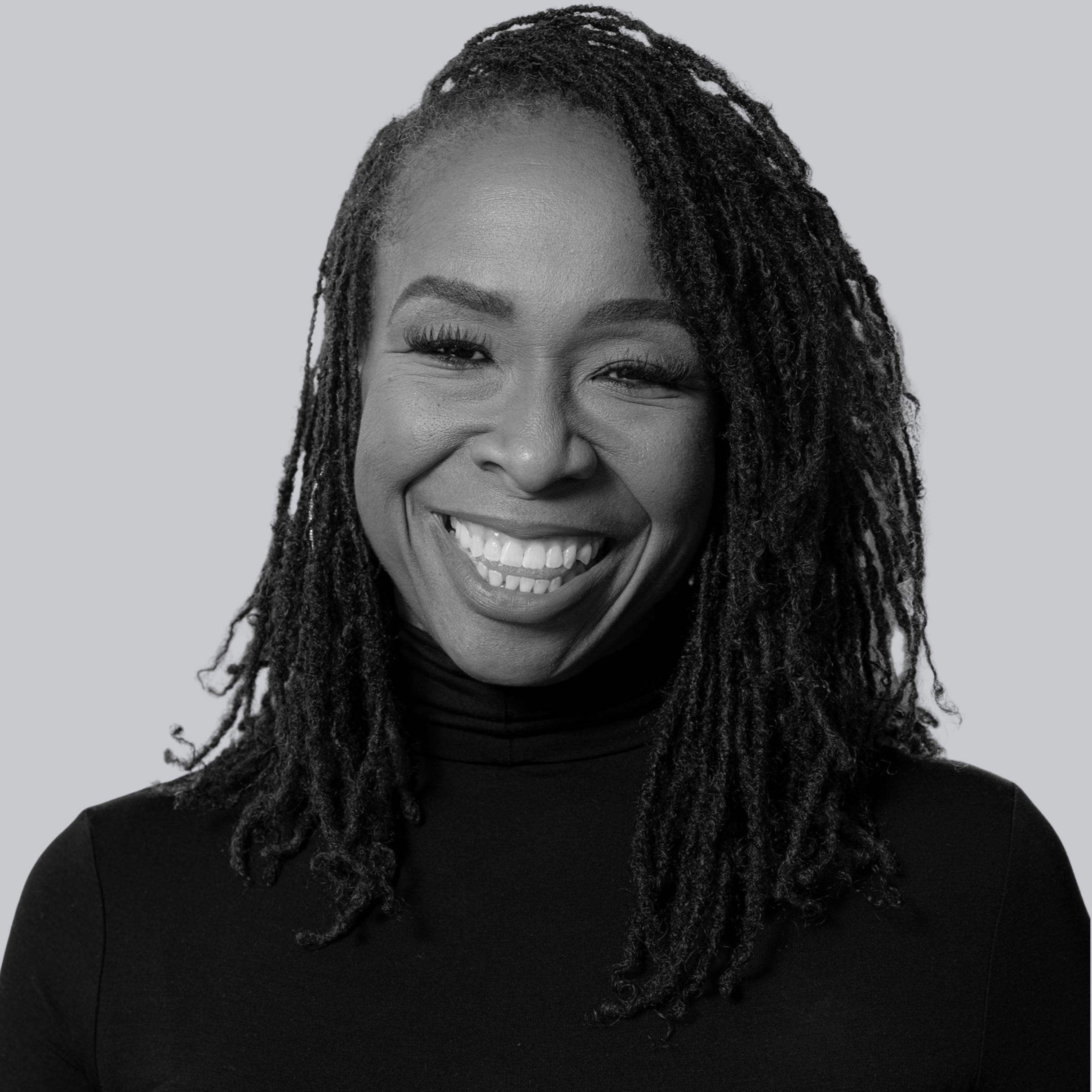
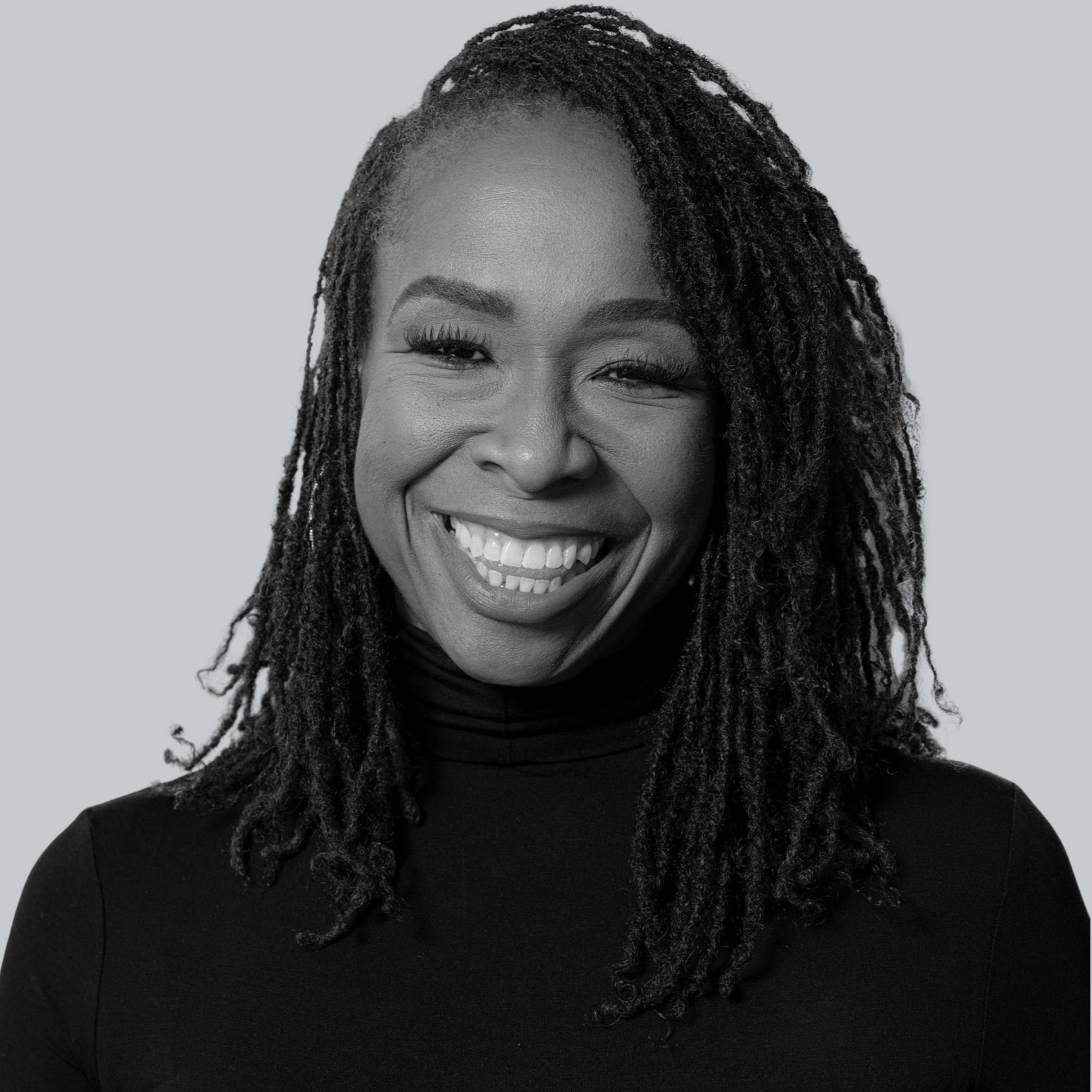
Ndidi Oteh of Accenture Song
Do you know yourself well enough to love yourself?
"FEARLESS CREATIVE LEADERSHIP" PODCAST - TRANSCRIPT
Episode 292: Ndidi Oteh
Do you know yourself well enough to love yourself?
In this episode of Fearless Creative Leadership, Charles Day speaks with Ndidi Oteh, CEO of Accenture Song — the $20 billion digital, creative, and technology transformation arm of global consulting firm Accenture. Named successor to founder David Droga, Ndidi brings to the role a lifelong creative sensibility, a deeply rooted leadership philosophy, and a belief that nothing great is ever accomplished alone.
She traces her relationship with creativity back to childhood — to a four-year-old girl in St. Louis who knew exactly what she wanted to wear and why — and reflects on how growing up as the eldest of seven, with significant family responsibility from a young age, quietly shaped her instinct for leadership. Ndidi discusses what it means to lead as an introvert, how a five-point personal ethos (developed over 20 years) guides her decisions daily, and why she approaches her role not with fear, but with a profound sense of honor.
She and Charles also explore the evolving definition of creativity in business, the myth of the leadership playbook, what it takes to build cultures that don't just tolerate mistakes but learn from them, and why Ndidi believes the most powerful legacy a leader can build is one that gets better after they're gone.
This is a rich, grounded conversation about servant leadership, self-knowledge, and what it truly means to make things better for the people around you.
—————
[00:03:10] Charles: Ndidi, welcome to Fearless. Thank you so much for coming on the show.
[00:03:13] Ndidi Oteh: Thank you so much for having me. I'm really excited to be here.
[00:03:17] Charles: When did creativity first show up in your life? When are you, when are you first conscious that creativity was a thing in the world?
[00:03:23] Ndidi Oteh: You know, I, I will tell you the stories that I would tell you that my, like, my parents have told me, because I think sometimes, you know, um, you have good memories of when you were young and also you have the memories that people have retold you over and over again. But when I was four, my, um, family used to always do family pictures.
[00:03:44] And so in the Midwest, I grew up in St. Louis, Missouri, that means that, um, you are going to a department store of some sorts, and you are setting up, and there's this background that you have, and I always knew what I wanted to wear. Like, I always knew what I wanted to wear. And my mom thought it was really odd, like, "Why are you taking so much time to pull together an outfit?"
[00:04:06] And, you know, she said she took me to the mall and sort of like out of courtesy, she said, "What do you want to wear?" And she was hoping I was going to choose the simplest, you know, outfit. I did not. And, um, I was like, "I want..." You know, I chose a dress, and I was really clear about what I- how I wanted the dress to move.
[00:04:27] I was really clear about what color I wanted it to be, and I was really clear about how it would feel. And my mom thought that was really odd, you know, because, um, she... I'm one of seven, so I have lots of siblings, and she said that I was the only one who had a really clear vision of how something should look, feel, and what it should do, like what it should create.
[00:04:49] And so I like to say at, like, the early age of four, I had a sense of both maybe, like, how I wanted to feel and the feeling I wanted to give to others by what I wore. And so that was probably the early, early stage of understanding, like, design, aesthetics, and what does that look like. And then from there, I will tell you, um, you know, I have always loved creativity.
[00:05:14] I think that, um, it is the part of our society that is... It's where art comes from. When I think about discourse and when I think about friction, I think about creativity. I think about, um, you know... And I wanted to be, when I was younger, really young, I wanted to be an interior designer, and my dad was like, "Think again."
[00:05:37] And then, and then I was like, "Okay." And he was like... And then I was like, "I want to be a lawyer." And then he was like, "Uh," you know. "Maybe become a doctor," because that is... And, um, I realized I don't like blood, so that was a little difficult to, um, manage. And also, chemistry wasn't my favorite subject, so he finally accepted that I was going to be off the beaten path.
[00:06:00] But, um, I have always loved creativity, so.
[00:06:02] Charles: Where, where were you in the seven? Where did you rank in the seven?
[00:06:05] Ndidi Oteh: Um, I am the second to... I like to say that I'm the oldest. That is what I say. That's what my family says, but I am the oldest girl. Um, I have five brothers and one baby sister, and, um, it has been, I think, like, my family is so important to me, but I also, um, when you're the oldest woman, you also get used to, like, taking care of everyone.
[00:06:27] Mm-hmm. So my siblings are both my siblings, and in a weird way, I'm also sort of their mom, even though my mom is amazing, and she's very involved. But, um, I also, they always, one of my br- my brother, one of my brothers always says, you know, "My mom," they call them, "My mom's my angel, and my sister's my mom."
[00:06:45] Charles: Wow.
[00:06:46] Ndidi Oteh: And so, but it's good. It's great. It's great. It's good.
[00:06:49] Charles: Um- The w- I'm, I'm always struck by the, um, uh, the dynamic of nature versus nurture. Where do you think that instinct came from? 'Cause it sounds like it wasn't your mother pushing it forward.
[00:07:05] Ndidi Oteh: No. You know, I think that, you know, I actually think I'm not sure where it came from.
[00:07:11] I think that there was always this propensity I had of, like, making things better. I learned at a really l- young age, so I think, um, I always sat from a position of I wanted to figure out a way to make something better, always for my family, for ... And I had a really, um, my father, my biolog- biological father passed away when I was really young.
[00:07:32] Charles: Mm.
[00:07:33] Ndidi Oteh: And, um, I remember at the time my mom gave me the responsibility of- Helping her take care of my siblings, but also, like, seeing that there's a way by setting things up a certain way, you can make things easier. There's a way of, like, the design and, like, how something works that makes it easier for people to accept and embrace.
[00:07:56] And so I learned that through language. I learned that through, like, events and planning and situations, um, fa- family gatherings. When you're one of seven, everything's an event, you know? Mm-hmm. Mm. It's not-- nothing is a small moment. Um, so I learned really early on that, um, how you put things together matters.
[00:08:17] And so I always have just been inspired by music and art and culture. Um, you know, a lot of people talk about what brings us together. Mm-hmm. And so one of those things is food, definitely. I would also say music and sports, you know? And I think that those are things that... And we're seeing it now, we're seeing it across the world, where there are artists and music that you can connect with someone who may be very different than you, but you're connected over this sound that you love.
[00:08:46] Or your favorite sports team, you know? Lots of cheering happening, and, like, all of a sudden in that moment, you feel like a community. And then also the sharing of food. And so those are-- like, to me, that's a core part of culture, and I think creativity is a core part of what culture is, and I've just always had an appreciation for it.
[00:09:07] Charles: Did the responsibility of having, of having your siblings treat you as a maternal figure, did that come naturally to you? Did you just accept that? Or did you feel like you were being deprived of your own childhood in some fashion?
[00:09:17] Ndidi Oteh: Yeah. You know, I never thought of it as being deprived ever until recently.
[00:09:23] My mom actually was talking, um, like, talking to a f- one of my friends, and she was like, "Yeah, you know, Ndidi didn't have a childhood." And I was like- Wow ... "
[00:09:32] Charles: What?
[00:09:32] Ndidi Oteh: When are you, you deciding to share that, in this moment?" Which I never felt that way, you know? I, I've always felt like it was an honor. It felt like a privilege to be in a position where, um, it just felt really natural.
[00:09:46] It felt really natural. And I saw what my parents were sacrificing in order to provide a certain type of life for my siblings and I. My parents, I, they, like, they didn't, I didn't, they didn't have money. They just worked all of the time, all of the time. And, um, they never said no to things that I wanted to experience, and I saw that, and I thought that, like, at a minimum, I can wake up every day and help them, you know?
[00:10:14] And, like, do the hard things. And so for me, it felt really natural. Um, some of my siblings, I don't know if they would say it felt natural to them. But for me, it felt really natural.
[00:10:25] Charles: So how did you express yourself within the context of all of that as you got older? How did you ex- how did you continue to express yourself?
[00:10:31] Ndidi Oteh: You know, I think that I always, um... When I was really younger, I used to, like- I used to do artwork, so I used to be... And I was a- Also, again, I'm from the Midwest, and if you're from the Midwest, you almost have to be a crafter a little bit. Mm-hmm. Like, that is part of I think it's a part of how you come up.
[00:10:50] So I used to sew all the time and make clothes, and I made jewelry for a while, and it's just those were things that were really more hobbies than I would say, um, I never felt like I was really good enough at them to... You know, you sort of need to do, I think self-reflection's important, and you sort of have to measure, like, can I make a career out of this, or what are you really, really good at?
[00:11:13] And so I decided no one would want to buy my jewelry, and that my clothes were good enough for me, but maybe not good enough to... Good enough for me and my friends. I used to make my friends T-shirts all the time and outfits whenever we would go places, or, like, there would be Halloween or something like that, so they would wear them, but I don't think anyone would ever buy them.
[00:11:34] So, um, I think early on I learned that I have an appreciation very much for it, but I don't think that I should be the one practicing it. I think others should, and I would love to lift them up as they do so, but, um, I was just always clear about that. So creativity has always been, like, just a core part of my life and what I'm passionate about, which is in many ways, um, when I, um, when I was graduating from high school, one of my first internships was actually, um, in a, um, buying office where I did the marketing for Lauder, Lancôme, Mac, and Chanel.
[00:12:12] So that was, it was, like, marketing campaigns, and I loved it, and it was, like, a way of being on the operational side, I feel as if, of components of creativity. And, um, I remember the first year I did it, I, for the first time, saved the company money, and they had never done that before. And so I was like, "Oh, you get to be close to creativity, and you get to be operational?
[00:12:38] Like, how great is that?" And so that is when I started maybe realizing maybe I wouldn't be going to law school, but it took me a lot longer to accept that, I think. But yeah.
[00:12:50] Charles: Do you think of yourself as creative?
[00:12:52] Ndidi Oteh: I think of myself as a creative thinker. I think of myself as a problem solver. Um, I would not consider myself a creative.
[00:13:03] I would consider myself someone who always wants to work really closely to creatives and someone who always wants to make sure that we're creating the space and the opportunity for creatives to shine, and I think that's needed just as much as creatives are.
[00:13:20] Charles: Do, do you think cr- is creativity the right word, do you think, in a business environment?
[00:13:24] I mean, I've always espoused it. The whole podcast is built around it. Yeah. My whole career has been focused- Yeah ... around creativity. Yeah. And I've always felt very comfortable talking about creativity really broadly, but not, not... I mean, I've worked in ad agencies, too, and-
[00:13:37] Ndidi Oteh: Yeah ...
[00:13:37] Charles: y- and you're right. Obviously structurally they're set up, here are the creative people, and here's everybody else.
[00:13:42] Ndidi Oteh: Yeah.
[00:13:42] Charles: But I, and s- and so I'm always conscious of trying to break that barrier down. But I increasingly recently I've heard people saying, "Well, it's not really creativity. Creativity is this thing that creates some sort of output."
[00:13:53] Ndidi Oteh: Mm-hmm.
[00:13:54] Charles: I don't think that's true. It, it isn't true for me. Mm. But I just wonder whether you think generally in the business world, are we Are we, are we being too narrow by using the word creativity, or do we need to educate people more broadly about what creativity actually represents in a business environment?
[00:14:11] Ndidi Oteh: You know, I would say I think it's a little bit of both, and I think the ownership exists on both parties. I think the first is I think businesses need creativity now more than ever before. I think it is critical to growth. Um, it is a catalyst for growth, and I think that means that organizations have to get used to having people on their teams who may come to problems a different way, through a different road.
[00:14:38] Maybe they arrive by plane. Maybe they arrive by helicopter, parachute. But, um, really that is going to be what drives relevancy for most o- for I would say most organizations in the future. In the same way, I think as the creative community, I think somewhere along the way, sometimes in order to protect who you are, you spend more time being, um, exclusive versus inclusive.
[00:15:04] Charles: Mm-hmm.
[00:15:05] Ndidi Oteh: And I think that the creative community, right, for a long time has probably felt a little bit under the attack, a little bit under of, "No, you are othered. You are over here," versus saying, "You are essential to who we are, and you are one of us because we are all aligned to the same vision and the same mission."
[00:15:24] And so I also think the creative community has an opportunity to actually be even more inclusive to how the creativity is defined and also who makes up that group. I
[00:15:37] Charles: mean, the original sin, it has always felt like to me, was charging for creativity by the hour. Mm. This extraordinary human capacity-
[00:15:45] Ndidi Oteh: Yeah
[00:15:46] Charles: that we were making earlier- Yeah ... that no other species on the planet has the c- has the ability to, to generate.
[00:15:51] Ndidi Oteh: Absolutely.
[00:15:52] Charles: And we turn around and commoditize it and say, "Yeah, this is worth $500 an hour or $5,000
[00:15:58] Ndidi Oteh: an hour," or whatever it is. Absolutely. Absolutely, and in some ways we do that in a very subjective way.
[00:16:02] Charles: Mm-hmm.
[00:16:02] Ndidi Oteh: And so it becomes more about positioning and maybe at times, um, cultural capital than actually, like, really thinking about the art form and what we're providing. I will say that I do appreciate that when we think about creativity today, I do feel as if we talk about it in a broader sense than maybe the way in which we were before.
[00:16:27] We spend a lot of time talking about the d- uh, I would say within Song, the different types of creativity.
[00:16:33] Charles: Mm-hmm.
[00:16:33] Ndidi Oteh: Um, because we have different types of creatives. We have designers. We have service designers. We have business designers. We have builders who are creators, and then we also have what maybe I would say in the advertising agency you would think of as traditional creatives, um, who are really focused on the brand and the positioning and the messaging.
[00:16:54] We have both. And we get to see how they work together and create powerful experiences and do things that you can never do alone. I'm just, you know, I'm a big advocate, like one of the like ethos of how I operate is there is nothing great I have ever done alone, and I believe that across the board, and that when you come together with other disciplines, that is where the power sits.
[00:17:18] Charles: So when you're talking about creativity, you're talking about a broad definition- Yes ... of original thinking- Absolutely ... as well as artistic ability.
[00:17:26] Ndidi Oteh: Absolutely.
[00:17:27] Charles: Problem-solving.
[00:17:28] Ndidi Oteh: Absolutely. Absolutely.
[00:17:29] Charles: Yeah, I think that's exactly right.
[00:17:30] Ndidi Oteh: Yeah, yeah.
[00:17:31] Charles: Has- was leadership always something you were interested in? I mean, given your background, was...
[00:17:36] Did you f- did you find yourself drawn to those opportunities to take responsibility?
[00:17:40] Ndidi Oteh: You know, I am, despite my, I would say, my, like, openness and my love for people, I'm actually more introverted, so I know. I think, um, I love learning people's stories. I love it. I think it's, um, you know, I love finding the beauty that you may not have expected, so I love hearing from people and talking to people and sharing with people, and you've already heard me say I love food and sports and music and all of the things.
[00:18:09] Clothes. But... And clothes, you know, and clothes too. But, you know, I will tell you, I actually, um, if like, if I got to choose, I'd probably be spending time by myself, quiet, reflecting, journaling, you know, thinking. Um, that is probably where, um, I am feel the most safe And so, um, I say that because I, I have always thought of leadership as really a responsibility.
[00:18:36] Um, you know, my dad always says, "To much is given, much is expected," and I have always felt that way. And if you have the privilege of being able to see something that someone can't see, or if you have the privilege and the tenacity to do s- the work that maybe no one else was willing to do, um, that comes with a responsibility, and I think it's an honor to carry.
[00:19:00] So, um, you know, my, my siblings would tell you that from a very young age, my parents would leave the house, and they would put me in charge, and I would immediately say, "Okay, this is what we're going to do," 'cause I think context is important.
[00:19:15] Charles: Yeah.
[00:19:15] Ndidi Oteh: And I think everyone needs to, like, keep the end in mind. I wanted them to know what the end looked like.
[00:19:20] I needed the whole house clean. I needed everyone to finish their reading, you know. I needed to make sure that everyone had ironed their clothes and that they were ready to go 15 minutes before my parents came. And so I learned different tactics to do that, and some were successful, some were not. But, um, I have g- had a lot of practice in that, and that bled into how I operated, um, in school, how I operated in different organizations.
[00:19:49] So volunteering has always been really important part of what I would say also I learned a different type of leadership. But I would say most importantly what I learned, um, I have five brothers. Three of them are lawyers, which means, um, I was never the loudest voice in the house. I learned that you don't always have to be the first one to speak to lead.
[00:20:10] You don't always have to be the loudest one. I have a soft voice, so you don't always have to be the loudest one to lead. Um, and sometimes leadership happens more by doing than actually saying. And so that's how I think about leadership.
[00:20:26] Charles: The idea of being drawn to safety m- uh, that someone in your position would be drawn to safety- Yeah
[00:20:33] is going to be surprising to, to people listening, right? Mm-hmm. And I, I'm, I'm always struck when I talk to people who have extraordinary positions such as you. I asked Marcel Markandes once, the, um-
[00:20:43] Ndidi Oteh: Yeah ...
[00:20:43] Charles: CMO of, of AB InBev- Yeah ... I said, "What's this job really like?"
[00:20:46] Ndidi Oteh: Yeah.
[00:20:47] Charles: Most of us don't have jobs like this.
[00:20:48] What's it really like? Yeah. And he said, "Sometimes it's terrifying."
[00:20:51] Ndidi Oteh: Mm.
[00:20:52] Charles: Does that resonate for you?
[00:20:55] Ndidi Oteh: You know, I never feel terrified, you know? I feel excited often. I feel, um, I feel often, um, I would say always wishing I could do more, you know? So I think I have this internal, like, intensity of there's so much more we could do.
[00:21:16] I feel as if we're on this, like we're on- we're in this world for such a short period of time, and I want to make sure that I've lived every inch of it, and I want to make sure that I'm making the space better for every individual I possibly could. And to me, that comes with, like, I feel the weight of the responsibility, but I also feel the honor of it, you know?
[00:21:40] And that's inspiring. So I think, um, I don't find it terrifying, Dave. Terrifying. I find it like, how great is it that I get to do this? And so that comes, I feel the responsibility- Mm ... of it constantly, and I ask myself, have I made, have I made enough impact? Have I helped move something forward? Have I helped make it easier for other people?
[00:22:05] Have I helped this amazing organization that I get to lead that has the best talent in the world, have I made it a place where they can be the most successful? I think about that a lot.
[00:22:18] Charles: I think, I mean, your point about leadership and the impact it has is s- strikes me. Um, I've always thought that leadership was the opportunity to create the biggest difference of our lives- Mm-hmm
[00:22:28] when we were given positions of this kind of responsibility.
[00:22:31] Ndidi Oteh: Yeah.
[00:22:31] Charles: Um, so- When you'll feel drawn to safety as an instinct, when you get up in the morning- Yeah ... do you have to put this role on? Or is, or do you, do you pull it out of the closet comfortably? Do you know what I mean?
[00:22:45] Ndidi Oteh: Yeah, yeah. It's a good, it's a really great question.
[00:22:48] You know, I will tell you, I'm a early riser, and I'm not one of those early risers who believes everyone should wake up early. I just want to believe. I believe there's a space for everyone, if you can't tell. I'm a person like everyone belongs.
[00:22:59] Charles: My wife thanks you for that- Okay ... because sh- she's not an early riser left to her own devices.
[00:23:03] Ndidi Oteh: Okay, it's good. But my, um, which I unders- I understand that. Yeah, me too. I, but also, do you know what? I probably, she's probably, is she a late night? Yeah, yeah, yeah. Is
[00:23:11] Charles: she, "
[00:23:12] Ndidi Oteh: No, don't call me," you know? Like, "Can we talk about this in the morning?" Right. You know? We can be
[00:23:18] Charles: friends at lunchtime then.
[00:23:19] Ndidi Oteh: Yeah, 100%. 100%, 100%.
[00:23:23] But, um, my morning time is really my time of, you know, I would say peace. It's, um, normally I, it's where I'm thinking the best. Like, if I have work to do- I will wake up extra early, so extra early is 3:30 AM, but my normal wake-up time is about four- I'm sorry,
[00:23:42] Charles: 3:30
[00:23:43] Ndidi Oteh: AM? That's extra early. Like, if I have work to do, that's extra early.
[00:23:46] But normally I wake up, um, between 4:15 and 4:30 AM every morning, even on the weekends and Saturday and Sunday. Um, I normally, I, like, pray, I journal. I, um, work out with a trainer when I am, um, at home, and, uh, my trainer always says, "Ndidi, I hope this is the hardest part of your day," which, you know, it normally is.
[00:24:08] It normally is, no matter at what the day is. I'm like, "Am I progressing? I'm not sure." But, um, that is sort of my time, and it allows me to clear my head and get ready for the day. And I will tell you, I think I do sometimes have to rally myself up. Like, "Okay, Ndidi, now it's time," you know? And, um, just really because sometimes I, um, p- I can't always be read.
[00:24:35] So sometimes something's happening, and because I'm thinking- Mm-hmm ... I realize that sometimes I have to speak what I mean versus people aren't going to be able to read what I'm thinking. Or, you know, David Droga says I have a really good poker face, which is funny because I smile a lot. But when it's very serious, I am the most calm.
[00:24:54] Like, in chaos, it is where I am the most calm, um, because I'm just able to... I am processing and not... and trying to make sure, like, what is the right next thing to do. And, um, you know, I think you- I learned that at a really early age because I- there was so much when you grow up in a big family, and I think anyone who has family, like, family has ups and down, like, lows and highs and, you know, is chaotic, can very easily be chaotic.
[00:25:23] Um, and so you have to decide what role are you going to play, and for me, it is always, like, you know, find the through line. And so, um, I spend time centering myself first before I get to enter into the day where there's always something amazing happening. There's always something that you're like, "Oh, I wish that didn't happen."
[00:25:43] There's always something you have to be thinking about, "Okay, I have to be thinking about three months from now, six months from now, a year from now, three years from now," while also trying to deal with some history that, you know, seems to not go away. So it's never a dull moment, but I do think it helps that I have a centering practice when I get started.
[00:26:02] Charles: Um, how do you maintain that when you travel? 'Cause you travel a lot, right?
[00:26:06] Ndidi Oteh: I do. I travel a lot. I travel a lot. Well, you know, I will tell you, like, this morning I woke up at 3:00 AM because I have some work to do. Here, here in London,
[00:26:15] Charles: UK time.
[00:26:15] Ndidi Oteh: Here in London, UK time. I woke up at 3:00 AM 'cause I had some work to do that I had not finished last night that, um, I needed to get done, and then I went to go work out.
[00:26:28] And then I prayed. I, like, did a little bit of journaling. I worked on a few things that I have coming up from a week from now and preparing for Cannes. And then, um, I also shot off a few emails, and then I came here today and, you know, ready to get started. And I think that, um, you know, it just becomes sort of this routine that you start to practice in, and it, it's not always perfect.
[00:26:53] You know, sometimes I have this thing where even if I just move for 10 minutes, that counts, you know? And so, um, I try and make sure at a minimum I move for 10 minutes.
[00:27:03] Charles: Mm-hmm.
[00:27:03] Ndidi Oteh: So sometimes that's, like, jumping jacks and squats and, you know, some pushups. That's it, that's it. It's really just for movement, you know?
[00:27:13] I, it's not for... I don't think I'm a person who people look at and they're like, "Oh, she definitely works out." Like, you know, because I'll- I'm probably eating pizza, and I'm probably asking for french fries, and definitely I want the bread with the meal. But I think that, um, like, the, us moving our body and that energy- Yeah
[00:27:34] it just feels like it gives me power, so.
[00:27:36] Charles: And are you trying to get to bed by a certain time- Mm ... on the night before?
[00:27:40] Ndidi Oteh: So my bedtime is 11:15 PM.
[00:27:43] Charles: So you can operate on four
[00:27:45] Ndidi Oteh: hours. I'm a four hours. And
[00:27:46] Charles: you're fine- I'm four
[00:27:46] Ndidi Oteh: hours ... with
[00:27:47] Charles: that?
[00:27:47] Ndidi Oteh: Yeah, yeah.
[00:27:48] Charles: That, so the- Yeah ... I mean, obviously there's some genetics involved with
[00:27:50] Ndidi Oteh: that, right?
[00:27:50] There, it, you know, my mom told me she kept taking me to the doctor because they were like, "She's not sleeping. Something is wrong." Which I was like, "You know, Mom, maybe those, that was like early ages of something you should've gotten checked out." Really truly. But, um, yeah, I've never really needed a lot of, uh, sleep.
[00:28:07] I think, like, six hours is like, "Oh." But, you know, studies tell you differently. I want to be very clear. So again, I would never tell anyone- Again, this is not a medical recommendation ... to follow this practice whatsoever, whatsoever. All of the research tells you you need at least eight hours of sleep. I fully recognize that.
[00:28:25] Right now, my life has been on four.
[00:28:27] Charles: You've already talked about- kind of a leadership ethos. You've, you've identified a number of features. Have you been conscious of developing w- a leadership ethos as you go? Or, or are you just able to look back and say, "Well, actually, I've learned this and I've learned that"?
[00:28:40] 'Cause what I find-
[00:28:42] Ndidi Oteh: Yeah ...
[00:28:42] Charles: in my work is a lot of leaders are not clear about kind of their leadership philosophy, for want of a better description. But it seems like- Mm ... you're, you have one.
[00:28:50] Ndidi Oteh: Yeah. You know, I have... You know, I will tell you, I have been really clear about it, and that's really because it's, like, how I operate.
[00:28:59] And you know, I mentioned earlier, I'm not extroverted by nature, which means that, you know, when I get started in the day, it's int- with intention. And so, um, I have always been really clear about, um, what's... You know, I, I journal a lot, and if I look at when I was young, I used to say, which I don't know how, but I have this journal of when I was 17, and I was talking about the type of work I want to do.
[00:29:23] And I, at the time, I used words like, "I want it to be dynamic. I want it to be innovative. I want to constantly learn. Um, I want to, I want to have fun, and I'm, I want to be able to impact and reach lots..." I remember writing this in, like... It was probably a Lisa Frank notebook. Like, it was not a, like... It was, you know, there was probably unicorns on it.
[00:29:46] It was not like ... Um, and I remember, like, where it was in the column, and just being really clear about the type of work and the impact I wanted to have at a really young age. And I also learned, my, my father is very disciplined, so, um, by choice you were forced to be disciplined even if you didn't want to.
[00:30:07] We woke up every morning at 5:00 AM. There was just, there were rules that you had to abide by as long as you lived in that house. And I think, um, that taught me a certain way of operating, um, that I am not as disciplined at all whatsoever. However, I have been really clear. I say always there's five things that I think are really important in how I show up every day.
[00:30:32] The first is, I, I believe in you do your work and you do it well, all the time. Do it and do it well. Then you can go to sleep at night, but just make sure you're doing your work and doing it well. The second thing I always say is make sure that you're helping someone else. It can't just be about you. Make sure you're helping someone else.
[00:30:50] Help someone who's never going to say thank you, who's never going to say, you know, "Oh, I got here because of you." Make sure you help someone else. The third is, um, let the bad things go. I think along the way, um, what I was seeing and experiencing is, you know, when you're trying to figure out your career, there's always going to be someone who might take your idea, who might say, whether intentionally or not, you know, it still doesn't feel good.
[00:31:14] I think there are things that are going to go wrong, um, and if you hold onto that, it prevents you from moving forward, and that wasn't just, like, me having this vision. I experienced that. I experienced when something went wrong, and when I held onto it, it prevented me from going to what's next. Um, the fourth thing I always say is find the good.
[00:31:34] Like, there's good somewhere. Like, assume best intent. That is how I like to always operate, so let's find where the good is and assume that there was best intent there and move on. And then the fifth thing is operate with both compassion and courage. And that is when I'm having a bad day, when I'm having, like, a good day, I run through that punch list, and I've had that punch list since at least for the past 20 years.
[00:32:01] Charles: Wow. So you review it Every day?
[00:32:05] Ndidi Oteh: Yeah, every day, but it's almost when something becomes natural to how you practice- Yeah, yeah ... it's like you will, like my t- if you talk to my team, you'll h- they'll hear, you- you'll hear it. I will say, like we'll be talking about something, and then you'll hear me, like all of a sudden pivot and I'll say, "Let's assume best intent in this situation."
[00:32:23] Or I'll say, "You know what? Let's help anyway in this situation." Or, um, you know, most of my team probably could rattle off those, those, those five punch list things because I talk about it as leadership principles that I ask of everyone, you know, because that's how I'm going to show up every day. And sometimes we're frustrated about something and I'm like, "Well, did you do the work and was it good?"
[00:32:46] Charles: Mm-hmm.
[00:32:47] Ndidi Oteh: You know, before we say this person and that person- Mm ... did we actually do a good job, you know? And, um, I think it's just been a really great revisiting point, so sometimes multiple times a day, but it's not like this formal in the morning I go through the five. But it is very much as I'm moving through the day, there are times when I'm like, "Oh, I did not do that well."
[00:33:09] "I would've loved to do that better." Um, there are times when I'm like, "I need to operate with some courage in this situation." There are times when I say, "I have to operate with compassion in this situation." And so, um, it helps sort of offer a sort of a compass-
[00:33:25] Charles: Mm ...
[00:33:25] Ndidi Oteh: as how I'm moving.
[00:33:27] Charles: You're remarkably anchored across multiple reference points, and you've mentioned praying a couple of times.
[00:33:32] There's a, there's an element, there's an air of spirituality almost about the way that you lead. Is that- Yeah,
[00:33:37] Ndidi Oteh: yeah ...
[00:33:37] Charles: is that fair?
[00:33:38] Ndidi Oteh: Yeah. I mean, you know, I think, like I grew up with, um, like I grew up in a family where, um, our, like faith practice was really important. So as, um, you know, as a Christian, it was always something that my mom also was really clear about, you have to define it for yourself.
[00:33:57] You have defi- like you have to build, I can't do this for you. And so if you look at my family, there's lots of different positionings of what they believe and how they believe. But for me, it has always been a really clear centering point of like, who do I want to be every day when I wa- wake up? Um, how do I want people to feel when they interact with me?
[00:34:19] And sometimes I don't meet my expectations, you know, but I think I always get another chance, and that is something to be grateful for, so...
[00:34:29] Charles: You, you have real intention as well, which is i- in many cases I find an attribute that's lacking from leadership. There's a, there's a lot of reactive leadership as, as you well know.
[00:34:40] Ndidi Oteh: Yeah.
[00:34:41] Charles: How do you make sure that you maintain intention? How do you, how do you distribute intention through- Yeah ... through your organization?
[00:34:47] Ndidi Oteh: You know, I, one thing that I do is I'm really clear about, I say to our team all the time, "Well, what's our vision? What are we trying to make sure that we get after?"
[00:34:56] And, um, it doesn't mean that can't evolve, but we need to know to... I always say you have to know what you stand for and know where you're going. Like, you have to. And so I always try and make sure that I'm re-grounding our, like, our teams of, like, "Hey, what do we stand for? Who are we? And where are we going?"
[00:35:15] And it does not mean that you don't look around you, you know? But I like to spend more time looking forward than to the side and backwards. And so you will hear me say for, I think, one year, one of my things was I was like, "Look forward. We are looking forward." And if you every day think about it that way, it allows you to move a little bit faster.
[00:35:36] It allows you to see things that you may not have seen before, and it makes sure that you're in the right place when you need to be. And that is just something that I, you know, I will tell you I've learned it through experiences and also through watching. I think sometimes, um, uh, experience is one way of learning.
[00:35:54] Another way is reading and watching and, you know, seeing someone else and being like, "Oh," and also giving them compassion. I think sometimes we look at another situation and it's really easy to, like, turn your head or be like, "Oh, I would never," or... You don't know. And it, right now, if I think about what so many corporations are going through, it is hard to lead right now, now more than ever before.
[00:36:18] And in many ways, there's a lot of analysis that people are go- because you're trying to figure out you want to make the right decision, and I think they want that because a lot of cultures don't allow you to make mistakes. They don't allow you to sort of actually look forward because they're spending so much time talking about what happened or what was.
[00:36:38] And I want to create a space and a culture where we are all able to look forward. And so I do that because I didn't always get to experience it, and so I'm like, I now am in a position where I get to create that for others.
[00:36:53] Charles: Are you looking for a certain kind of person within that context? Uh, uh, do certain kinds of people do better working for you than others?
[00:37:01] Ndidi Oteh: You know, I will say, um, I will say two things in reference to that. One, I think it's a responsibility of a leader to, A, put people around you who are not like you, um, who are smarter than you, who might be able to figure out something in a different way, who think differently than you. Um, that is what I believe.
[00:37:21] I want my leadership team to push me in ways that I may not always align to, but I want them to push me because I believe in what they're offering. And that is why they're at the table. They're at the table to have a voice, not to just execute mine. And, um, you know, I feel really privileged to be able to say that because that's how David Droga was.
[00:37:44] You know? I think David listened to my ideas, my thoughts, my pushes, or this is what I believe I want to go do with this portion of the business. This is what I think we can build together. And I never felt as if, um, I was held back for maybe having a different positioning or, or a broader positioning or, you know, a different angle in which to look at it.
[00:38:07] If anything, I was encouraged, and that is what I think delivers the best results. So I think one piece is it's the responsibility of a leader to also shift and adjust and make room for your other leaders. That's one piece. I will say also, I like people who want to learn. I like people who... And I used to always say, "Admit your 'I don't know.'"
[00:38:32] You know, I like people who don't have to always be right. I like the type of people who raise their hand and ask for help. Those, and I like people who treat other people well, people who they may not agree with, people who they may have different political, religious, you know, behavioral views. I like people who treat people well.
[00:38:55] And though that's what matters the most to me. So no, I don't like to have, you know, I will say, I will save any, um, curse words on this call. But people who are not nice, I don't want them on the team, you know? I want people who will learn, who will do the work, who like have a work ethic, and like excellence, you know?
[00:39:16] Because, you know, while I say I operate with intention, it is to be the best.
[00:39:21] Charles: Mm-hmm.
[00:39:21] Ndidi Oteh: You know? And that's what I want. And I think, um, we have all the right things at the company that I'm at now to be able to do that.
[00:39:29] Charles: The conditions that unlock creativity in an organization are pretty specific I've found, and I think for a long time people used to think, "Well, we'll just kind of hire talented people and stick them over there and hope that they come up with something magical."
[00:39:42] And, and my experience and my learning is that in fact we can identify what are the conditions that unlock creativity.
[00:39:49] Ndidi Oteh: Yeah.
[00:39:50] Charles: You've i- you've actually mentioned some of them, but I'm curious whether you have a kind of a comprehensive view about what's the kind of environment and culture that you're trying to create.
[00:39:59] Ndidi Oteh: Yeah, yeah, absolutely. We do. We've actually commissioned some research that we're releasing in two weeks, so specifically in reference to that, so some of that I will save for that conversation, I will say. But, um, I will tell you generally, you know, um, I don't think anything when thinking about creativity, I think you have to be
[00:40:21] And when ... I would say when thinking about whenever you're building anything, there is this balance between, um, being intentional, um, but not being so prescriptive that you don't allow for the surprises to happen, you know? And that's where some of the greatest ideas come from. And so I actually think in many ways by like sort of taking creatives and as you mentioned, like when people sort of say throwing them in a corner, um, that didn't actually provide the infrastructure for them to make the greatest impact that they possibly could.
[00:40:55] There is some level of like, "Hey, you gotta let people work." Mm-hmm. You know? And it's funny because we believe that in every other ... Like, if you look at different ... You would never say, like if you're looking, if you're building a house, you would never say, "Hey, we're going to stop," like as they're pouring concrete every five minutes to say, "Oh, but what about this?"
[00:41:15] Or, "Have you thought about this?" You would never. You know, like you gotta let the team work. You know, when you think about even, um, you know, we were talking a little bit earlier about surgeries and, like, no, you need the surgeon to work, you know? Yeah. You don't interrupt. Like, you don't- but you don't, you don't say, you put them in the corner.
[00:41:33] You say, "Hey, what's the environment? Do they have the tools? Do they have everything that's ready? Is their music right?" Whatever they need to wear. Is- are the... Whatever they need to create the right environment, you want to create it so that they can do the best job they possibly can. And I believe it's our responsibility to do the same thing with creatives, and that does not mean that you don't have to push, you don't have to make sure that there's learning experiences.
[00:41:58] It doesn't mean that you don't have to make sure that there's true integration, because I actually, we believe strongly that it's the integration of technology, creativity, and I would say human ingenuity, that really drive growth, that really drives impact. But it, you have to make sure that you create space for all of those components to excel
[00:42:21] Charles: There used to be a leadership playbook, didn't there, for, for, for most positions?
[00:42:25] I think for a long time there was a, the ability to copy and paste at least large sections of the leadership playbook. Mm-hmm. Mm-hmm. Today there isn't one because- Yeah ... nobody can predict- Yeah ... even six months into the future really with any, with any degree of certainty.
[00:42:38] Ndidi Oteh: They can't. They can't. They can't.
[00:42:40] Yeah. And you know, Charles, I would push that I'm not sure there was ever really a leadership playbook. I think there was one we told.
[00:42:49] Charles: Mm-hmm.
[00:42:50] Ndidi Oteh: And we used to only tell one story.
[00:42:51] Charles: Mm-hmm.
[00:42:52] Ndidi Oteh: Now we're s- now there is spotlights of a lots of different stories, and now we have more challenges. And so now there's this greater conversation of, "Hey, it's not going to be just one path," and there's not just one...
[00:43:09] I do think there used to be this way of like, "This is the way to progress," um, and it was just a certain type of progress. And now there, I think we all have a broader understanding. There's lots of ways to progress. There's lots of ways of defining success, and there's lots of ways of what, um, building, like, I would say, teams that are empowered to really do impactful work.
[00:43:37] Um, there's different ways you can do that. And so I a- I do agree with you. It's not like you can't just go at the checklist. Because you used to, I think you're right, you used to be able to go to the checklist and say, "Okay, I'm 60%. I'm more than 50%- Right ... there." And now you can do that and you could only be 20%
[00:43:54] Charles: there.
[00:43:54] And I, and I think that- It's not enough. Yeah ... you, you used to really develop mediocre leaders, right? Because there was very little original thinking. There was play it safe, here's what you're supposed to do. Follow
[00:44:02] Ndidi Oteh: mentality. Yeah. Don't be first.
[00:44:03] Charles: Don't be first. Don't even be second, right? Make sure that, make sure that they've all figured out- Yeah, get in on the...
[00:44:08] Right. Yeah, yeah, yeah. We'll just going to keep gliding along. Yeah. And I think the era we're living in has, demands more of leadership- I agree with you ... than, than ever-
[00:44:15] Ndidi Oteh: I
[00:44:15] Charles: agree ... in fact, I think in human history.
[00:44:17] Ndidi Oteh: I agree.
[00:44:17] Charles: And creates more opportunity.
[00:44:19] Ndidi Oteh: Yeah.
[00:44:19] Charles: I mean, because technology has democratized, the ability to get your voice- Yes
[00:44:23] out in the world is democratized. It does. There's no filter anymore other than- It does ... your own kind of-
[00:44:26] Ndidi Oteh: Yeah ...
[00:44:27] Charles: self-doubt-
[00:44:28] Ndidi Oteh: Yeah ...
[00:44:28] Charles: really.
[00:44:28] Ndidi Oteh: Yeah. But how great is that?
[00:44:30] Charles: Yeah.
[00:44:31] Ndidi Oteh: You know, in some ways it's like, oh, it's more challenging, and it's more inspiring, and it means we can do things we never have been able to do before.
[00:44:39] And so there's a little bit of it's harder, but it's better.
[00:44:45] Charles: You know? Absolutely. So it's better. Yeah. And way more learning, right? Way more learning. If you're open to, if you're open to learning from other people-
[00:44:49] Ndidi Oteh: I agree. I agree ...
[00:44:50] Charles: it, it completely changes the dynamic, I think.
[00:44:52] Ndidi Oteh: I agree. I agree. It doesn't work if you don't have a mindset to learn.
[00:44:56] Charles: No, it- Really ... no, and a curiosity. Absolutely. A- and, and I think it's interesting because... Well, let me ask you the question. Do you have any kind of imposter syndrome?
[00:45:06] Ndidi Oteh: You know, I, um- I don't. I,
[00:45:14] Charles: I, uh-
[00:45:15] Ndidi Oteh: You, you look regretful about it ... I think, you know, I, um, I think, A, the language has probably gotten bigger than what it was in- initially intended to do.
[00:45:24] I think it was initially intended to talk about a feeling, um, of like, you know, just know that when you're in the room, you belong to be in the room. I will tell you, whenever I'm doing something for the first time, it feels like I'm doing it for the first time. You know? I've never been in this podcast with you.
[00:45:41] I don't have an imposter syndrome about being here at all. Um, there's never a situation that I can think of where I have that. There are situations where I go in and I'm like, "Oh, I've never done this before," and it could look We'll see what happens. But I talked to you a little bit about how I think, how I operate, how I move, and part of that also means I also make sure that I have a team of people around me-
[00:46:07] Charles: Mm-hmm
[00:46:08] Ndidi Oteh: who are also excellent, you know? And I've always been certain about certain things. I've been certain that, um, sometimes I'm going to get it right and sometimes I'm not. I've been certain that I can learn anything.
[00:46:21] Charles: Mm-hmm.
[00:46:21] Ndidi Oteh: I've been certain that, um, if I don't know it, someone else does, and I've been certain that you never do anything great alone.
[00:46:31] That changes the environment around what does it mean to think about being an imposter, because I think sometimes we think of it as you're going into a situation where you feel like you're alone. Um, and I never feel alone when I'm going into a situation. I feel as if I am going into the situation on the stories, the strength, the power of so many people who I've had in my life who've poured into me, of so many people I've been able to observe, watch, experience.
[00:47:04] And, you know, I do have to say it helps when you are in an organization that helps to foster that as well. And so for me, it's, like, not a feeling that I have had to experience, while I am very compassionate and understanding that for some people it is.
[00:47:24] Charles: So self-doubt is not part of your day-to-day?
[00:47:28] Ndidi Oteh: I would say, um, self-doubt is not part of my day-to-day.
[00:47:33] It does not mean I don't say at times, like, I will use something superfluous when I'm trying to think about if I can lift a certain weight. Doesn't mean that I'm not like, "Ugh, I'm not sure I can do this." I absolutely have those thoughts sometimes. Sometimes I'm like, "I don't know if I can stay up for one more hour to send this note."
[00:47:56] Sometimes I say, "Hey, I'm not sure I feel 100% ready to give this talk," or, "I'm not 100% confident about where we are." But my confidence doesn't exist in just the moment. My confidence exists in I work for, uh, one of the largest technology consulting companies in the world. My confidence is in that I work with some of the most amazing creative strategists, like operational leaders who are designers, who are a...
[00:48:29] who have built great things together. I have confidence in that. So what that allows me to do is move and operate with a certain level of freedom that I feel like is different than if I was just going in by myself. Um, yeah, I feel like very privileged and grateful that I don't have to think about that every day Mm.
[00:48:53] Charles: Let's talk about the, um, the founder transition, which I always think is a fascinating evolution in a business.
[00:48:59] Ndidi Oteh: Yeah.
[00:49:01] Charles: I don't know that it's technically, I mean, I, I guess it, it's hard to know whether David is technically the founder of Accenture Song. I guess he is in some respects, but nevertheless- Mm-hmm
[00:49:09] clearly the dominant force behind the creation- Yeah ... of that business. Yeah.
[00:49:13] Ndidi Oteh: Yeah, yeah, yeah.
[00:49:13] Charles: Um, talk to me about what was it like, what has it been like stepping into somebody else's very large shoes and taking- Yeah ... a company that was kind of framed and designed around him-
[00:49:27] Ndidi Oteh: Yeah ...
[00:49:27] Charles: and now taking it in your direction- Yeah
[00:49:29] and put- making it in your image.
[00:49:31] Ndidi Oteh: Yeah. You know what I think is really interesting about Accenture Song is I've been at Accenture for almost 15 years. Um, Accenture created what they at the time called Interactive about 15, the year that I started at Accenture, interesting enough. And it was Accenture's first move to say, "Hey, we recognize something's happening right now in the market.
[00:49:55] We recognize that technology is starting to get in the hands and changing the way consumers and customers and patients and constituents operate. And so because of that, we want to help our clients navigate that space." And they started that with Accenture Interactive. And what they started doing is acquiring, before even acquiring Droga5, acquiring, um, almost f- like over 40 different agencies who had different sensibilities, different capabilities.
[00:50:27] Some of those were in production studios, some of those were creative agencies, some of those were digital product agencies, some of those were B2B marketing agencies. Some of those were, um, grounded in, like, sales transformation and the future of CRM. Really lots of different capabilities that existed.
[00:50:49] And, um, when Julie Sweet decided to, um, acquire Droga5, and then when she said, "Hey, David Droga, I'm going to make you in charge of not just Droga5 as part of this acquisition, but I'm going to take this founder and make him in charge of all of it," that is when David said, "Hey, I love all of these independent agencies sort of existing on their own, but there's something that could be more powerful of us working together than individually apart."
[00:51:23] And that is what David created. Um, and that, um, happened about four years ago, where there was truly this complete transformation of what does it mean to really think about us operating as one versus us operating as different parts. And that was always Accenture's intent, and so we were d- operating that way.
[00:51:47] As the different acquisitions came on, we would operate as one, but we let everyone keep their name. And there's something around culture and naming that, um, David is brilliant at this, where he said we need to be one name. And so that was really taking the ways of working of integration that we were doing and really pulling us together to say, "Okay, this is what it means to be Song."
[00:52:11] And so, um, what I actually believe that was like a step towards what I believe Accenture was always building in the sense of an understanding that there is something about creativity and technology that is changing the world. And so having the opportunity to be a part of Accenture and then be a part of Song under David's helm allows me to sort of bring the both the best worlds together as we look forward to what's next.
[00:52:45] Charles: And from an emotional standpoint, how do you navigate putting your own stamp on the company while dealing with the legacy of all the things that he did, m- many of which were obviously so successful?
[00:52:57] Ndidi Oteh: Yeah. You know, it's really interesting because I don't think, um, it's about my legacy. I don't think it's about David Droga's legacy.
[00:53:07] I think it's about our legacy, and I, you know, I mentioned earlier, like, how I feel about when people talk about, um, imposter syndrome and what does it mean, and I think somewhere along the way we've become so, um... Our, our, our shortcut is the individual story. You know, we have these idols and leaders that we look up to and we say, "Oh, it's this person," but we don't show the team behind them that makes it easy for them to start their day at 10:00 and, you know, have coffee and eat, you know, eat breakfast a certain way, and we don't talk about everything that happens backstage in order for, you know, the front stage to happen.
[00:53:55] And, um, I think that actually the biggest part of a legacy is what do you leave after it, not what you've done. And so when I think about that, I think about, um, what David has helped shift Accenture to be into something so much more than ever before. Like, really the sharp point of creativity was Droga5 and that being at the forefront of so much of what Song does.
[00:54:25] I think about his vision of really wanting to tie, take the integration to the next level, and I think the reason why he chose me as his successor is because he knows what my vision is, is to do that in a way that is even bigger and more integrated than we've ever been before. And so David has known, you know, I'm a person who loves brands and loves creativity and is also a phenomenal operator and knows how to run a business.
[00:54:58] He got to see me do that for the majority of it, like, for the largest part of his business. And so, um, he got to see that. Julie Sweet was able to see that. Amini Sharma was able to see that. And so I think that it positions me in a place where if I ever have a company that's named after myself, I will talk to you about my legacy.
[00:55:22] But I work for a company where my job is to actually build its legacy, and I think that is powerful because, again, I think what we do with others is so much more powerful than what we do by ourself.
[00:55:36] Charles: How do you define success today?
[00:55:39] Ndidi Oteh: I would say learning every day. Um, you know, treating people with care, seeing the things that other people overlook, and making sure that you're creating space for the people who may not always fit, and making sure that we are actually driving value for our clients.
[00:56:00] You know, you choose to do client services only if you're willing to sort of be in the background. That's the gig, you know?
[00:56:07] Charles: Mm-hmm.
[00:56:07] Ndidi Oteh: You don't get to s- always say, "Oh, that was me who did that. Oh, this is what..." You get to take the blame inevitably when something goes wrong. But when something goes well, you don't always get to...
[00:56:21] And I think you, um, to me, that's the true, like, it's like a true, like, model of leadership. I think servant leadership is the best type of leadership because, um, it's about, like, how you serve and, um, w- what you create. Like, I think, um, success to me is did we create an environment that drove growth for our clients?
[00:56:43] Did I create an environment that created the space for our, my leaders to be the best they possibly could? Like, did I create an environment that helped change, um, you know, and hopefully will, like, in small ways, change the world? So that is what success means to me.
[00:57:02] Charles: One day we'll have a debate about servant leadership.
[00:57:06] We'll do that, we'll do that offline. I have a point of view about that, but I won't... But people who have listened to this podcast have heard it before, so I won't, I won't repeat it. But I'd actually love that conversation with you at some point. Um- Yeah ... when you get to the end of this part of your journey-
[00:57:17] Ndidi Oteh: Yeah
[00:57:18] Charles: what, what do you want to be able to say about the time that you've led this company?
[00:57:22] Ndidi Oteh: Yeah. You know, I, this is what I will say. I think that, um, nothing is supposed to be forever, you know? I, you know, I believe that, and I, um, I think it's why you, you, when you asked me earlier, like, how do I feel about certain things?
[00:57:37] If you can't tell, I'm like, have so much energy for it because I'm like, this is a moment in time, you know? And it's such a privilege to be in this moment of time to actually be able to drive change, you know? I hope that, um, I am able to create the space for whoever comes after me. I hope that... You know, I always say, when I think about my past leadership roles, I always say, "If I've left, and if it doesn't get even better, I did something wrong."
[00:58:08] Mm. Because, like, great leadership is creating an infrastructure for it to excel even when you're not there, and that is what I want. I want to create the space, the environment, the impact that changes more than just Song, that changes more than just Accenture, but that helps to change the industry. That to me matters more than anything else.
[00:58:32] Charles: If you could talk to the 20-year-old version of yourself, knowing what you know now, what would you tell her?
[00:58:39] Ndidi Oteh: You didn't meet all of your expectations.
[00:58:44] But, um, that I don't have to be... You know, I was very disciplined when I was younger, very. And sometimes I look back and I'm like, "If I had that energy now, I mean, who knows where I would be?" That's what I say. But, um, you know, I think that I would probably say, um, maybe work a little bit less. Have a little bit more fun.
[00:59:10] You know, say, "I love you" more to the people that you love, and, um, it will all work out in the end.
[00:59:18] Charles: I'm going to ask you a question as part of the wrap, which I haven't asked anybody else, I don't think, but it's been a, become a really important question in my life. And it- Mm ... came from my therapist a couple- Mm
[00:59:28] two or three years ago, I think. And we were talking about legacy, actually.
[00:59:31] Ndidi Oteh: Yeah.
[00:59:32] Charles: And she said, "I don't, I'm not really a fan of talking about legacy." She said, "I don't think you can ever figure out what's going to matter to you when you're taking your final breath and you're looking back- Yeah ... on your life-
[00:59:40] Ndidi Oteh: Mm
[00:59:41] Charles: and, and what you want that to be." She said, "The question that I find much more motivating and inspiring and, and so insightful is, what else do I want to find out about myself?"
[00:59:50] Ndidi Oteh: Mm.
[00:59:51] Charles: Interesting. How would you answer that?
[00:59:54] Ndidi Oteh: You know, I, um- I think I care less about what else do I want to find out about myself, and I care more about, like, how can I continue to make other people's lives better I don't know how I'll feel in my final moments, but I hope that I am being grateful and gracious to myself of, like, making my family's lives better, my friends' lives better, my teammates' lives better, the companies I've been able to serve's lives better.
[01:00:33] I hope I have made things better, because that's what I've always wanted to do. So for me, I hope that I'm, I'm, like, acknowledging the fact that I did what I was intended to do being on this earth. So that's what I hope.
[01:00:50] Charles: As you look at the future, what are you hopeful for?
[01:00:53] Ndidi Oteh: Uh, that, you know, um, there's a saying that the curve actually ha- When I say that, I mean that I really hope that, um, I believe that, like, I believe in human ingenuity, and I believe that, um, good prevails, and I am hopeful for that, and I am hopeful that we continue to find ways to connect more than separate, and I am hopeful for being able to create, uh, like, an organization and a culture that helps corporations do that, you know, and reinvent who they are and who they want to be.
[01:01:36] So that is what I'm hopeful for, along with a lot of other things. You can tell I'm a passionate person. So, like, there's so many things that I am... And I am generally positive, you know? I, like, even when it's dark, I see the light, so you know.
[01:01:52] Charles: I really want to thank you for coming on the show. We-
[01:01:54] Ndidi Oteh: Thank you for having me.
[01:01:56] Charles: It's, it... W- I talk all the time about leadership that sits at the intersection of strategy- Mm-hmm ... and humanity, and you are the absolute personification of that. And the, and I think the depth of the thinking and the level of self-awareness that you bring to leadership, what it means to you and what it can mean to others, is very rare and really inspiring.
[01:02:14] So thank you- Mm-hmm ... for coming on and sharing so openly. It's been an absolute pleasure.
[01:02:17] Ndidi Oteh: Thank you. It's been so wonderful. This is my first podcast as the CEO of Accenture Song, so it is wonderful.
[01:02:24] Charles: Well, thank you for sharing it here. So thank you.
[01:02:25] Ndidi Oteh: Absolutely.
—————
If you'd like to know more about our work with the leaders of highly creative and innovative businesses, go to fearlesscreativeleadership.com. There, you'll also find the audio and the transcript of every episode. Or, go to our YouTube channel for the video of our most recent conversations.
Fearless is produced by Podshop. Sarah Pardoe is the show's producer and handles all guest inquiries. You can reach her at sarah@fearlesscreativeleadership.com.
And thanks for listening.